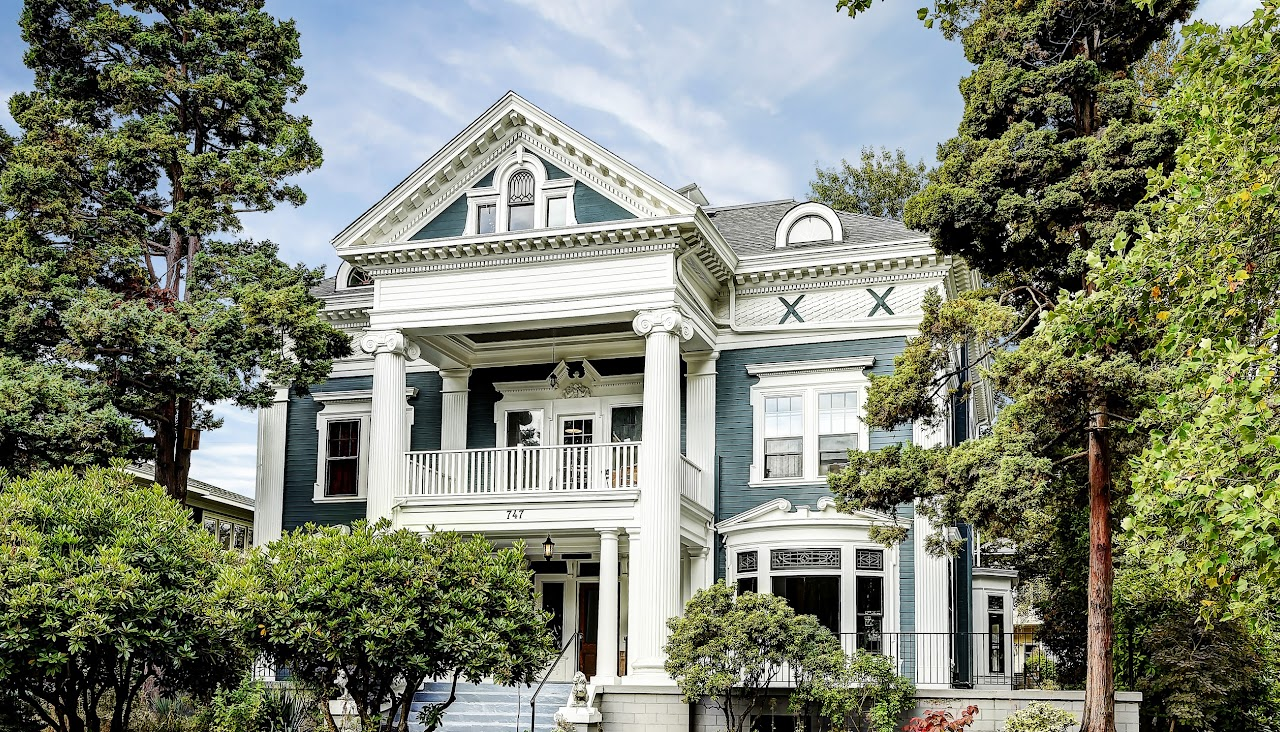
We were called the “rich hippies” after we moved into the house. Noah and Eve were the only kids. Noah was two and a half, Eve was one year old.
Davis, David, and John knew me at the UW Sociology Department. We had bonded at an unexpectedly violent anti-war demonstration in Renton, where we chained the gate at a gated community. The Boeing corp President lived there along with other executives. Incensed that they would be late to work that morning, the executives watched in their cars as their servants confronted us. Davis was stabbed in the foot by a pitchfork wielding gardener. I later learned that we were calling ourselves the Provisional Revolutionary Action Group or PRAG.
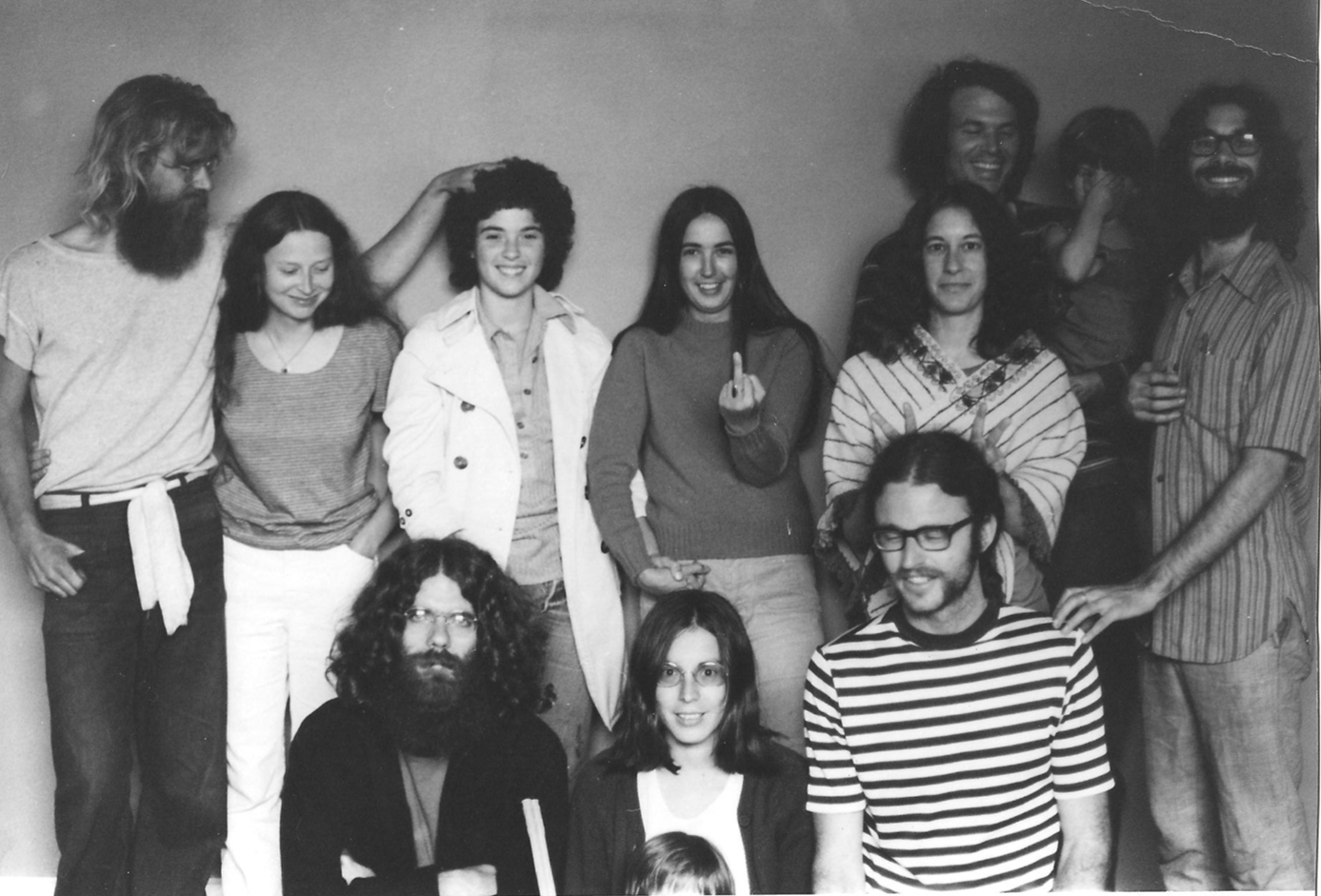
PRAG Founders (incomplete), 1972: Susan holding Eve (face hidden), Bill, upper right holding Noah (face hidden). Leslie Gerth, David Baylon, John Hall, Davis Straub, John Honeywell, Penny Mauldin, and others whose last names I am longer sure of: Deborah, Jeff, Jill, Kelly
PRAG – first day in the house on Capitol Hill -Bill Kornblum (top right, eyes closed holding child; Susan Kornblum holding semi-visible child, bottom, center)
Some years after Susan and I were back in NY, I heard from one of the founders, David Baylon, that PRAG now stood for the Public Research Applications Group.
Prag House, located on Capitol Hill in Seattle, was originally purchased in 1972 by our collective of University of Washington graduate students and professors in sociology. We put the property into Trust in 1976 to maintain it as a cooperative house in perpetuity. The purposes of Prag House are to encourage communal living as a viable alternative and to advance the growth of cooperating communities and non-polluting technologies.
I was an untenured assistant professor at the University of Washington, in the second year of my three year contract. Susan, my wife, was working on her dissertation in psychology and doing some serious nesting. We had two children, , Noah, a boy, of almost two, and Eve, almost one, born at Group Health Hospital in Seattle that year. We lived near Ravenna Park in a small private house with a backyard and a rabbit. Susan’s sisters, Ricky and Barbara, were also living in Seattle at the time, often with us. . We were comfortable living in an extended family, on top of each other, also with an irascible bloodhound named Phoebe.
1971: Endless War in Vietnam had bled over into Cambodia. Susan and I and her sisters and their cousin Peter, also living in Seattle, were our own anti-war affinity group. At demonstrations we joined protestors many of whom were colleagues, university students and other faculty members, like Michael Hechter and Jeff Morris. The idea of the Provisional Revolutionary Action Group (PRAG), developed among a core group of sociology graduate students and others who were living communally in two apartments near the University. They included, especially Davis Straub, Leslie Gerth, Penny Mauldin, David Baylon, John Hall, Nick Licata,( who later became Seattle’s most progressive city councilman), the hippie anarchist and musician, John Honeywell, a Seattle special delivery mail carrier, Frank somebody, and others I can no longer chance to name.
After one violent demonstration in Renton, where Davis Straub was stabbed in the foot, the Prag people urged me and Susan to join them in purchasing a house where we all could live communally. Our couple and family discussions of this decision deserve a separate chapter, but I want to get to the story of the House. (https://www.praghouse.org/)
How much did it cost and where did the money come from? No one had any real money (except Frank the special delivery mailman (another story). Jeff Morris (in the stripped t shirt) and I were faculty members at the U.W. and earning regular salaries. Jeff and Jill were married, but Susan and I had the standard package, two children and a dog. I guess we looked the most respectable, and we were willing to be the titular mortgage holders. Everyone put what money they could come up with (temporarily) in our bank account, which finally came to about $15,000. Maybe $1800 of that was actually Susan’s and mine.
Prag House on Capitol Hill at the corner of 16th and Aloha, had been on the market many months, needed paint and TLC. But it was also a mansion. Seattle was in the midst of a severe regional slump due to the completion of the design phases of the Boeing 747. Thousands of high tech people had been laid off and were leaving town. This was still the Seattle of old boom and bust days. There was no Microsoft, Starbucks, etc. The market for a 27+ room house in the “inner city” was nowhere. We made an offer of about 45k which I imagined could never get us anywhere. To my amazement the sellers came back with $48 or thereabouts, and we were told by the Seattle Trust that we,. Susan and I, would qualify for a mortgage, and a first home-owner discount. The deal seemed to be happening. I felt numb. And Worried.
We needed to wait for the closing before doing anything in the house. I warned everyone that they needed to stay put in their apartments. We could not move into the house before the closing. But it was the end of the month. The apartment folks desperately wanted to avoid paying another month’s rent in two places. I worried they would not be able to resist moving in before the closing, which would be in a few days. I was right.
When I drove up to the house that Thursday I saw my anarchist friends carrying their beds into the house. I figured we were cooked. I was particularly worried that the neighbors would see all these hairy kids moving Into the house which they had fought so long to rid of its previous tenants, a home for wayward young women. If aroused neighbors ganged up on the owner and the bank, our fragile deal could easily be blown. There were nineteen of us, including our family of four. We had a plan to deal with occupancy laws, which I will get to a bit later, but at the moment we/they were illegal occupants. Susan and I had some time before our rent was due and could give my landlord adequate notice. I was feeling like the only adult in the Provisional Revolutionary Action Group. And meanwhile, back east, my own adulthood was in question among our own parental adults, as they fretted about out prospective move into a commune.
Of course the next day, Mr. Green from the bank called me to say that the deal was in jeopardy. The bank was nervous. No details were given. Mr Green suggested that I had to speak immediately with a Mr. Anson Brooks who would be available to see me in his office downtown, that day, Friday, at 4pm.
Mr Brooks’ office was high atop the IBM Building, then Seattle’s primo office tower. I sat down in a chair across the grand mahogany expanse of his desk. I think I remember wearing a jacket and tie. I hope I did. Mr Brooks fixed me with a blue-eyed stare, not quite a scowl. “Kornblum, what’s going on with this house? I thought we had a deal.” I explained as background that an Economics Professor and I, also a prof at the University (not emphasizing the often suspect field of sociology) were going to use the house as a residence for faculty and graduate students. We would hold seminars and discussions and other worthy activities. I tried to make it all sound as boringly academic as possible. With no idea where Mr Brooks came into this situation, I played out my hand and held my breath. Mr Brooks looked to be a very fit, a leathery outdoors man in his seventies. He was not so much unconvinced as impatient. “Listen Kornblum, its 4:15. I have a plane to my fishing camp in BC at 5. We need to get this done. I have to get Donna Gort and her people out of the Capital Hill House. There’s a place in the country we have found. This deal needs to get done.”
So that was it. He had a charitable interest in moving the girls out and needed us in. (It might not have even mattered to him, I thought, that we were a revolutionary group, and merely a provisional one at that.) He asked his secretary to get Mr Green on the phone.
“What’s the problem with the Capital Hill house, Al,” he demanded. They spoke for no more than one minute. When he hung up Mr Brooks said: “OK Kornbum. The bank agreed to hike the price up to 52k and I sign a secondary note to make up the difference, which you pay off monthly, in addition to the mortgage. It will come to a few more hundred a month. Take it or leave it.” I was shaking inside and thanked him profusely. He was already getting ready to leave. As I moved quickly toward the door he called me back: “Kornblum,” he growled, “Don’t screw this up or I’ll come get you.”
Later I called Mr. Green. He offered no further comment but assured me that the closing would go forward as planned, just as Mr. Books insisted it must.
Back at the house on Aloha and 16th, in the heart of Capital Hill, there was rejoicing at my news. We started planning what would become one of the greatest and wildest parties I have ever had the pleasure to attend. But I worried a lot that the neighbors would come after us as they had when pimps of Ms. Gort’s young ladies had come looking for their girls and knocked on their doors by mistake.
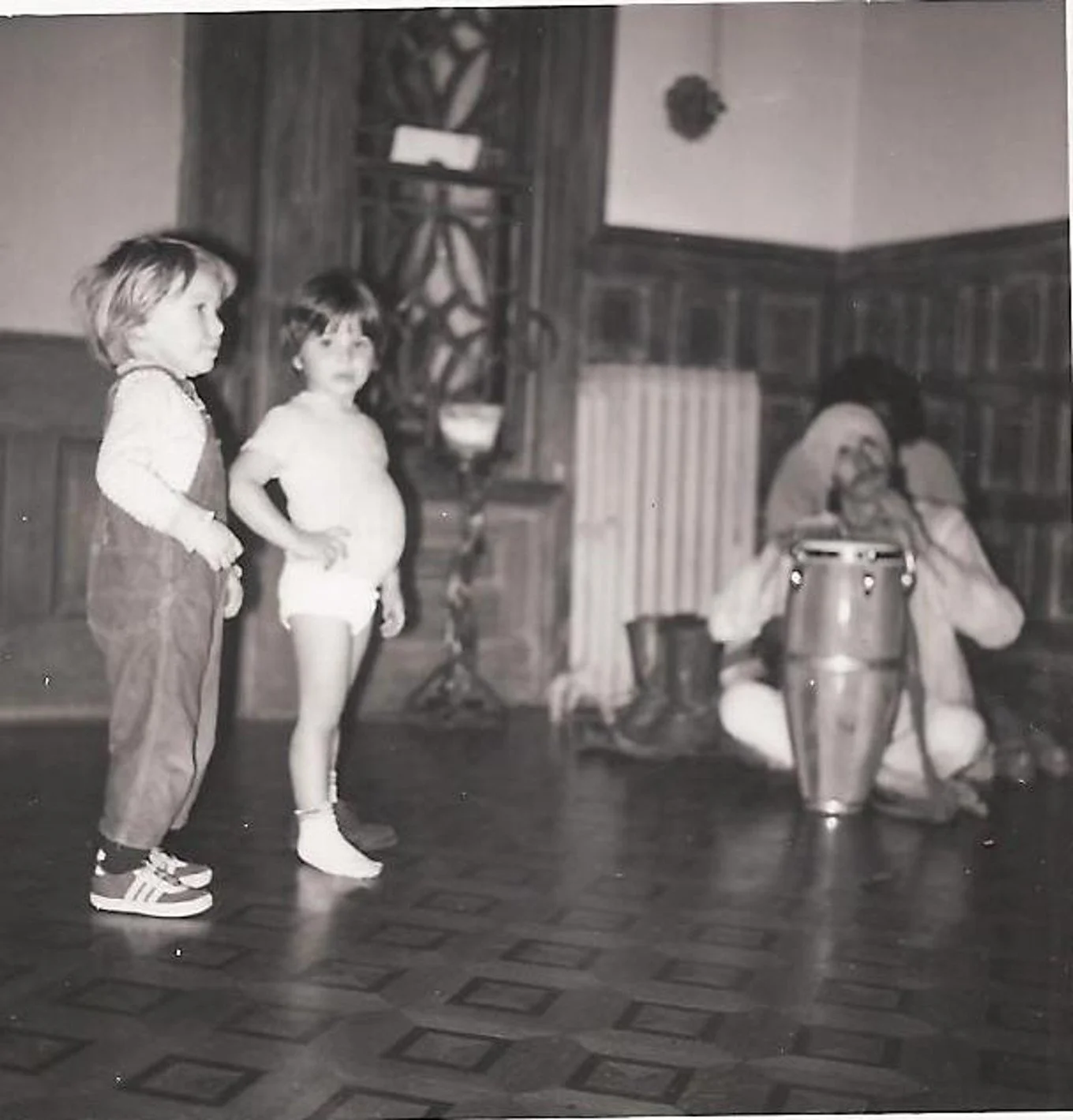
Josh and Noah (in diapers) meet a chanting Hari Krishna visitor, Parg 1973
Anarchist PRAG had no official leaders in the formative days of the commune. People led according to their confidence in their abilities to get jobs done. Penny, for example, was a wizard at all things having to do with carpentry, tile, paint and building,and repairs. She often took the lead in forming work crews to get home repairs and fixing done. Maybe you could say that I was the leader in worrying, and in issuing warnings that no one heeded. But we did have the problem of occupancy under control.
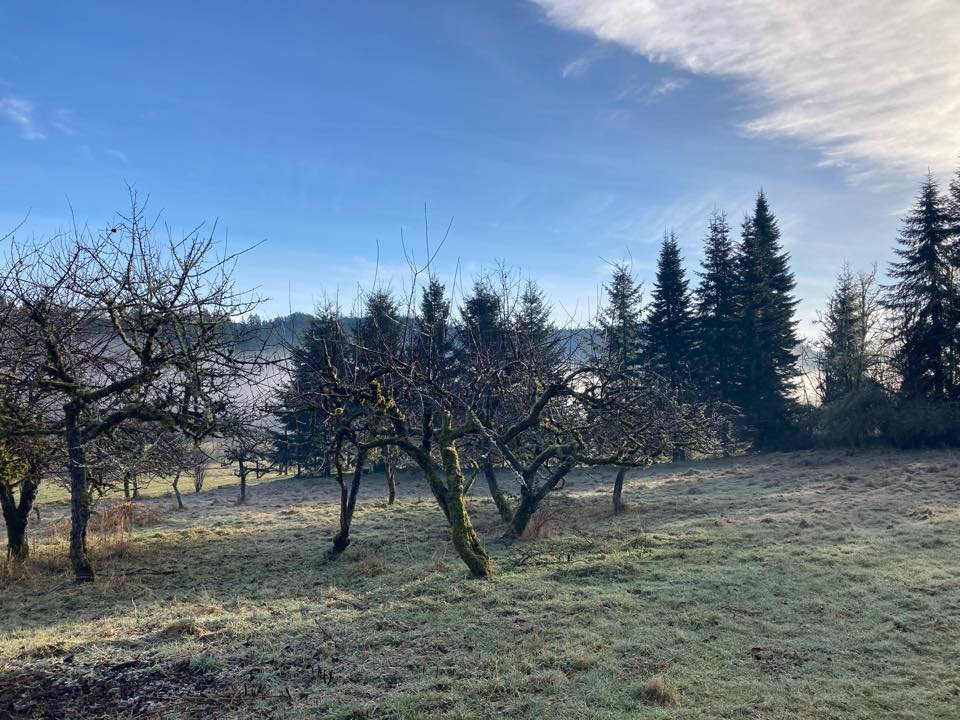
For a ridiculously small amount of additional money, we had purchased a twenty acre farm parcel near Arlington WA, north of the city. There we had already brought in utilities, built a large garden, a cabin with a ferro-cement Clivus Multrum composting outhouse (https://clivusmultrum.com/) and, of course, a geodesic dome. Prag people who wanted to spend more of their time working the land could maintain their official addresses at the farm, so we never were officially over the occupancy limit at the Capitol Hill house. Pragtree Farm and Prag were created at the same time and became the first holdings of the eventual Evergreen Land Trust. The PRAG community (some tamer years later the initials were said to refer to the “Public Research Applications Group” ) never missed a payment to the Bank or to the generous Mr. Brooks. Susan and I returned to New York in 1973. We yielded our titular ownership of the house to the Land Trust when it was created in 1979.
Being among the original founders of the PRAG house in Seattle is one of our proudest family achievements.

Cabin building at Pragtree Farm, David, John, Bill Kornblum, Noah Kornblum1973
Mr. Anson Brooks made it happen. See his story below:
Anson Brooks; Newsprint Industry Legend Befriended Many In Travels | The Seattle Times
Evergreen Land Trust History
The Evergreen Land Trust Association is the oldest community land trust in the Pacific Northwest. The organization began as a grassroots effort to promote affordable housing, cooperatives, recycling, and other progressive initiatives related to land reform. In 1976, the first properties were donated into ELT—Prag House in Seattle and Pragtree Farm, near Arlington.For each of these properties, a Trust Agreement was established to convey specific stewardship and educational purposes that would be held in perpetuity. A corresponding Use Agreement was written to define the responsibilities of residents in caring for the property. Over the years, ELT incorporated other properties using the same model. Each property’s unique stewardship and educational objectives align with ELT’s core purpose
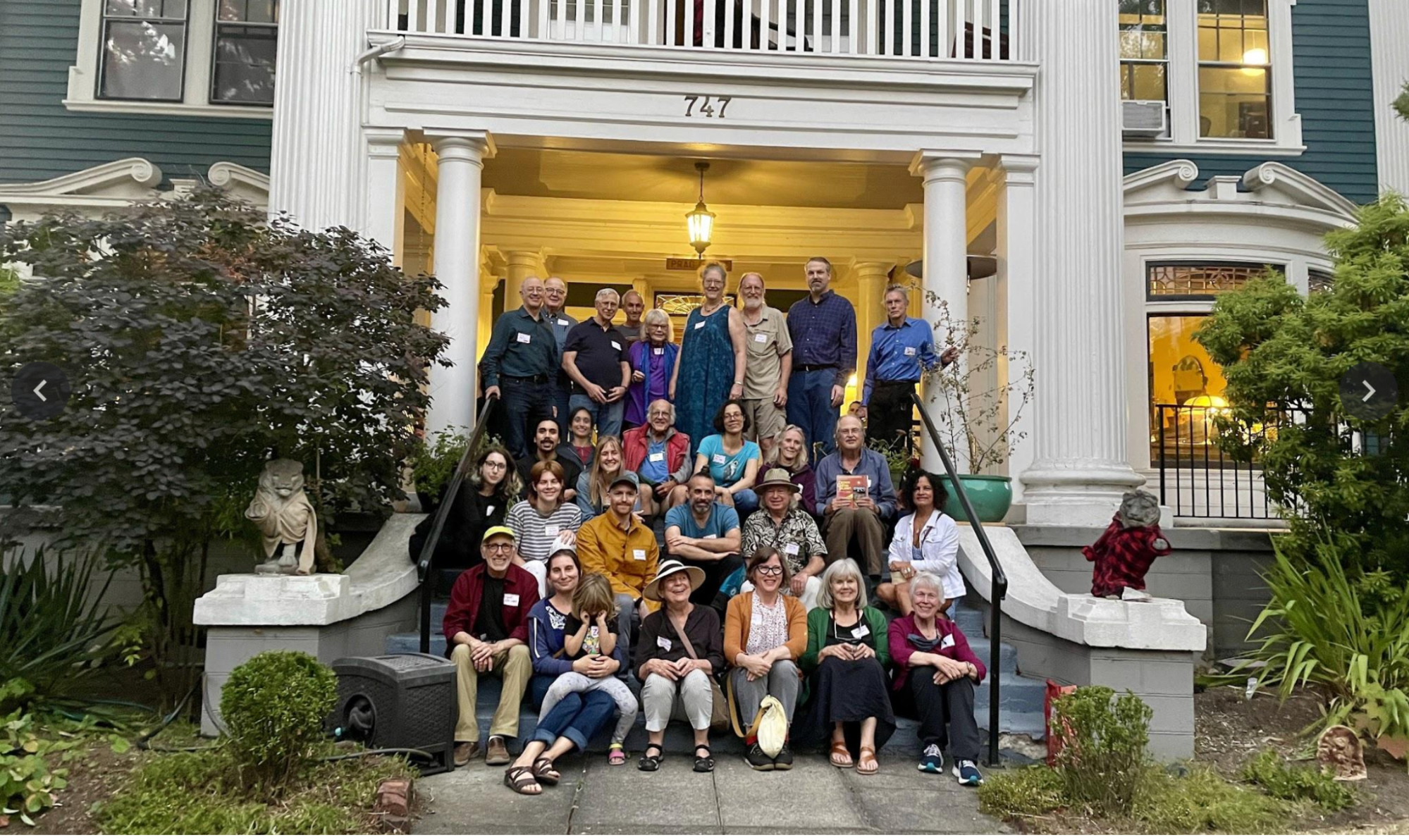
Prag 50th anniversary 2022– don’t recognize any of those in photo, among more recent communards.
I also don't know any of the people who dig and garden at Pragtree Farm in Arlington, WA. But I sure am proud of their work.
Davis Straub
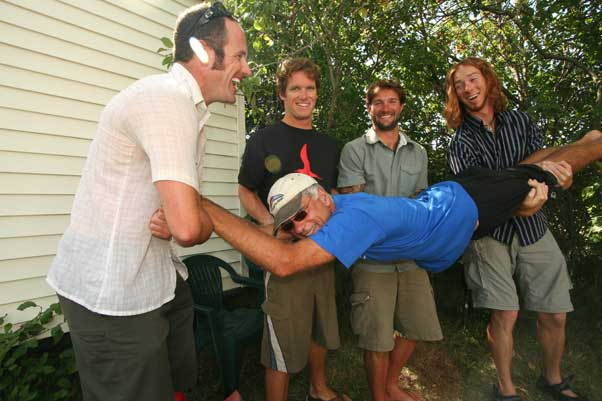
Davis Straub (in blue)– former intellectual hippie, and sociology graduate student, he wrote an early Microsoft manual,soon after “retired” to a life of serious hang gliding and adventure.
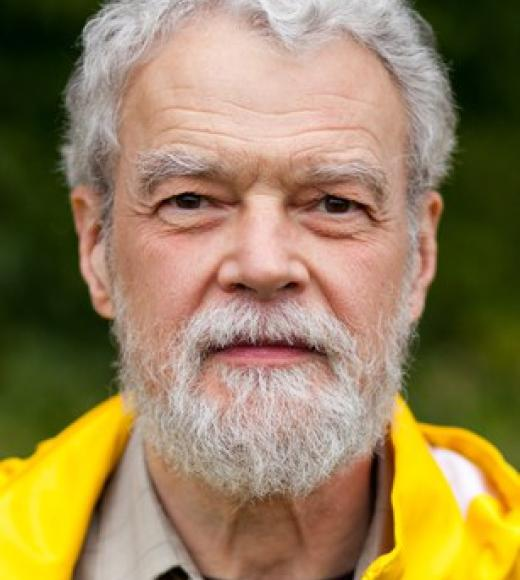
John R Hall – Founder and Deepest Thinker
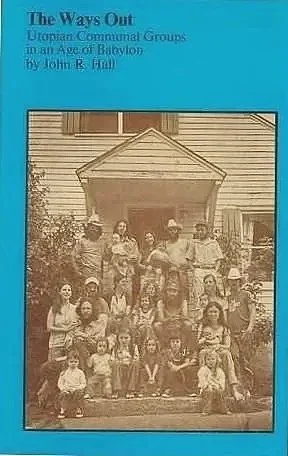
The Ways Out: Utopian Communal Groups in an Age of Babylon, by John R. Hall. London: International Library of Sociology, Routledge and Kegan Paul, 1978
Nick Licata. Our Mover and Shaker
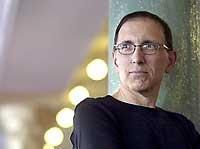
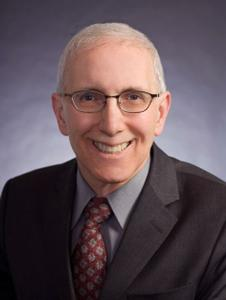
Nick was in on the founding of PRAG and moved in a year or so after it was created. He became its informal leader in the community. We met at the U.W.
Nick Licata, Seattle City Council: Political maverick emerges as mover Sep 12, 2004
After more than 17 years on the Seattle City Council, Nick Licata steps down, January 21, 2015
