Fire Island and Cape Cod National Seashores

Fire Island Household Survey and Beyond, 1974
Our CUNY research for the Fire Island National Seashore’s first master plan (1974), was about the ”in -held communities” and homeowners' uses of the island’s resources. (More on F.I.communities)
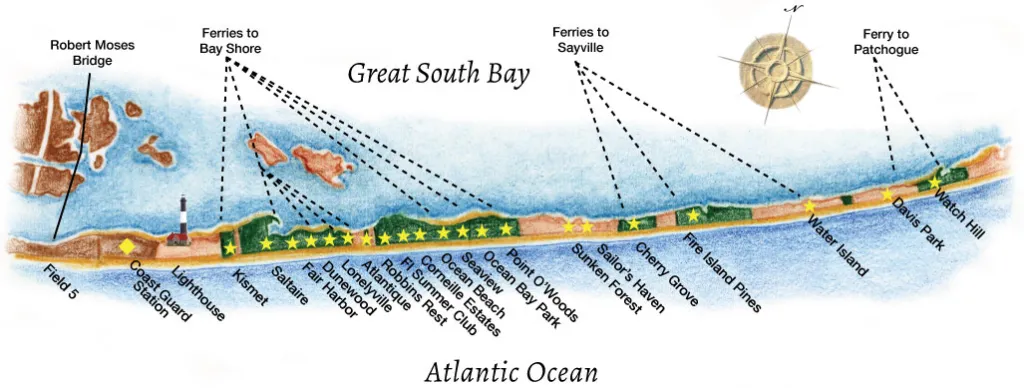
It was the first large planning-related survey accomplished by the new Graduate Center Cooperative Research Unit, which I was creating from scratch, with the help of grad students who were eager to work and learn. So work and learn we did.
Fire Island's Residents Reject Federal Master Plan for Region, NY Times
“PATCHOGUE, LI., May 21—At an emotional and often raucous meeting here tonight the men and women of Fire Island told the National Park Service that its proposal to withdraw Federal supervision of their area was unacceptable.
Your proposal, gentlemen, is just plain no good, one resident of the resort region shouted at the Federal officials, who had organized a public meeting to solicit community sentiment on a new controversial master plan for Fire Island.
The view was echoed by nearly a thousand community residents and their supporters, who waved placards, stomped their feet, booed, hissed, whistled and loudly derided Park Service officials, who appeared at times nervous.
‘This opposition to the proposed master plan is apparently fed by a fear that if the Federal Government lifts its zoning and supervisory control of the western six miles of the 26 mile barrier beach, there would‐be haphazard development of the area.”‘
The back story of the Fire Island Master Plan centers on Nat Reed, of the U.S. Department of Interior. He and I were responsible for bringing almost 800 New Yorkers, homeowners and summer residents of Fire Island, to the St. Regis Ballroom where they yelled at us park planners for two hours. The public meeting at Patchogue High School was even larger and angrier. No wonder we looked nervous.

After we, the multidisciplinary Park Service planning team, had finished a draft plan with recommendations from innumerable public comments and agency recommendations as required by NEPA, we sent our plan to the Boston regional office of the NPS, where it was further tweaked. Most of the emphasis in the draft plan was on preserving and protecting the Island’s natural resources, controlling human settlement expansion through zoning regulations, and creating attractive beach facilities for day visitors who arrive by ferry at Sailor’s Haven or Watch Hill.
When we presented the draft plan in Washington to Sec. Reed and the Park Service Officials there was a hush in the room. No one wanted to say anything before Reed indicated how he felt.
Sec. Reed rose to his full height of at least six five, strode stork-like to our wall map, paused for a moment and then instructed us to revise our draft with one major new recommendation: We would recommend moving the park boundaries to beyond Watch Hill, while retaining park facilities at the Lighthouse, Sailor’s Haven , and Watch Hill. This would end the problem of complaints from the former “in-held” communities and vastly simplify the management and development of the Seashore.
It also enraged the Fire Islanders in the city and on Long Island. They had fought Robert Moses’ plan to build a road the length of the Island, as he had with Jones Beach to the West. The Seashore had been their guarantor of preservation. Now their shield would be gone and the issue of a connecting road would again become a threat. No wonder they turned out by the irate hundreds to dump on us planners and on the embattled Fire Island Supt. Jim Godbolt.
In retrospect, the despised Fire Island draft plan we circulated was a classic example of a “goat in the kitchen strategy.”‘ As soon as the outcry grew loud enough, Sec. Reed let us know that we could retract the hated proposal (ie. take the goat out of the kitchen) but keep in the plan everything the Park Service wanted in the way of enforcement of regulations, limited development and more.
Nat Reed had won his spurs in the fight to save the Florida Everglades. A true environmentalist, he and his style of Republican leadership are missed.
Cape Cod National Seashore (CCNS) Nudity Study 1974
To document application of the newly imposed anti-nudity regulation at Cape Cod National Seashore
Streaking, or running naked through a public place, began on college campuses in the late fall and winter of 1973. Unsurprisingly, it was most popular at warm-weather schools.
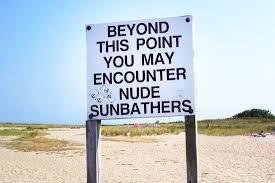
Nude sunbathing has been illegal on Cape Cod National Seashore since 1975, making it one of only two national seashore parks in the country to specifically prohibit the practice. Like many controversial things, its heyday was ultimately responsible for its decline.
A federal regulation was passed prohibiting nudity in the park after a New York Times article exposed Truro as a nude beach hot spot in the early ’70s and thousands of visitors thronged to secluded corners of the Seashore to sunbathe in the buff. In order to reach these tucked-away places, nudists and the gawkers that followed them trampled over fragile dune vegetation and parked on private property.
Nudity at the Cape Cod National Seashore: ‘A game of hide-and-seek’
CUNY CCNS Nudity Study, 1975
This study was requested by the Boston Regional Office and Larry Hadley, the Seashore’s founding superintendent. The Park Service needed some real data about the who, where and when in beach nudity on the Seashore. Supt. Hadley spoke with great authority and a genuine New England accent. He was a senior Park Service figure. The Seashore was a creation of the Kennedys and their world’s presence on the Cape. He requested that the Boston regional office of the Park Service fund our study, which it immediately did.
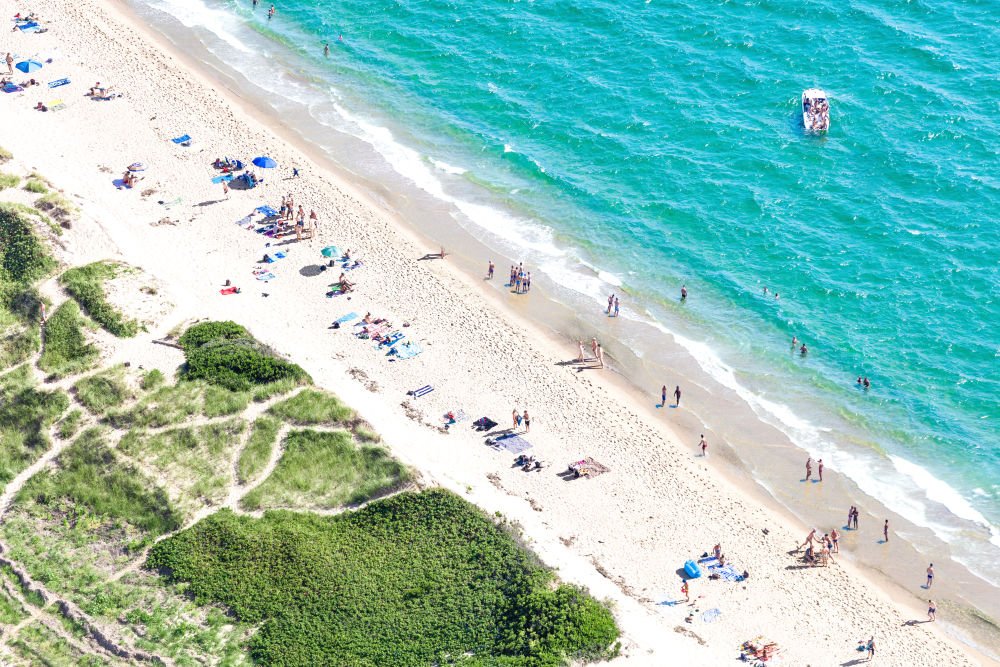
Graduate Center field research staff, my graduate students, watched the beach from above. When rangers busted – gave desk appearance tickets – to nude sunbathers, CUNY interviewers (my graduate students) went down and interviewed “the perps” about their experience, knowledge of the rules etc. and demographics. The late Nina Fortin led the field work.
Our draft report to park managers and regional office staff found two rather different patterns of beach nudity. In the dunes of the northern district, around Provincetown, nudity was a longstanding practice, most often practiced discretely in the dunes, away from developed areas. In the Southern district of the Seashore, at the public day-use beaches below Truro, nude bathing and sunbathing were more visibly public. It also attracted gawkers and became an environmental nuisance.
Not surprisingly, our data showed that the large majority of citations were issued to day visitors. Few if any were issued in the northern dunes. We did not speculate in the draft report about the possible causes for the wide enforcement disparity. Let’s just note that the gay citizens of P’town can be extremely outspoken when angered.
Supt. Hadley complemented me and our team on our fine draft. But that was the last time anyone saw the report. Not long after, however, Superintendent Hadley asked me to direct a much more ambitious and even more controversial study about the use of off road vehicles on the Seashore.
Race Point, CCNS ORV Study, 1985-86
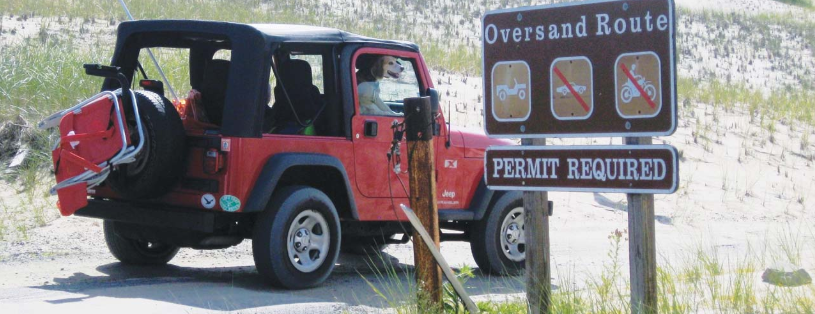
In April 1985, the Park Service released its report entitled "Visitor Experiences on the Cape Cod National Seashore." The study, prepared by researchers at the City University of New York (CUNY), posed broad questions to over 1,000 beach users concerning the quality of their experience at the Seashore. It found that only thirteen percent of Cape Cod visitors felt that Off-Road Vehicles (ORVs) should be restricted further or eliminated entirely. Based upon this evidence, the study concluded that ORV use does not have a significant impact upon visitor experiences.
Chrome on the Range: Off-Road Vehicles on Public Lands by Jeffrey L. Bleich:
Originally published in ECOLOGY LAW QUARTERLY 15-1 ECOLOGY L.Q. 159 (1988) www.NationalAgLawCenter.org
Outdoor research like this could be delicate and controversial. Which of the opposing factions criticized or praised it often depended on whose case was damaged by the empirical outcomes. On the outer Cape, for example, the environmental groups who were suing the Park Service to restrict ORV’s attacked our methodology. The judge rejected their arguments. His citations supported the study which he found convincing.
TK Bg Cape Cod and Urbanization

National Parks and Rural Development: Practice And Policy In The United States, by Gary E. Machlis, Donald Field, et al. | Sep 1, 2000
