Chicago Steel-Mill Communities
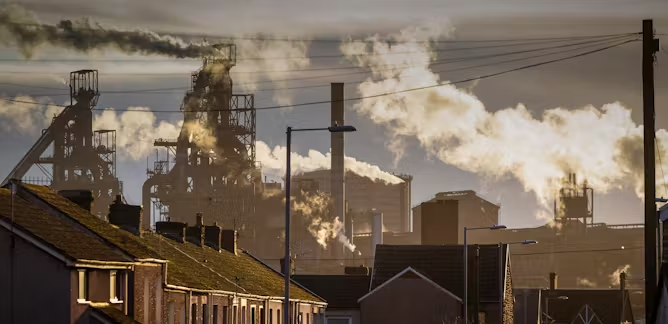
Millgate, a l South Chicago neighborhood, 1970s
The steel plants in Chicago created an industrial geography, where all the surroundings seemed scaled up to accommodate the ore carriers and the transport of finished steel.
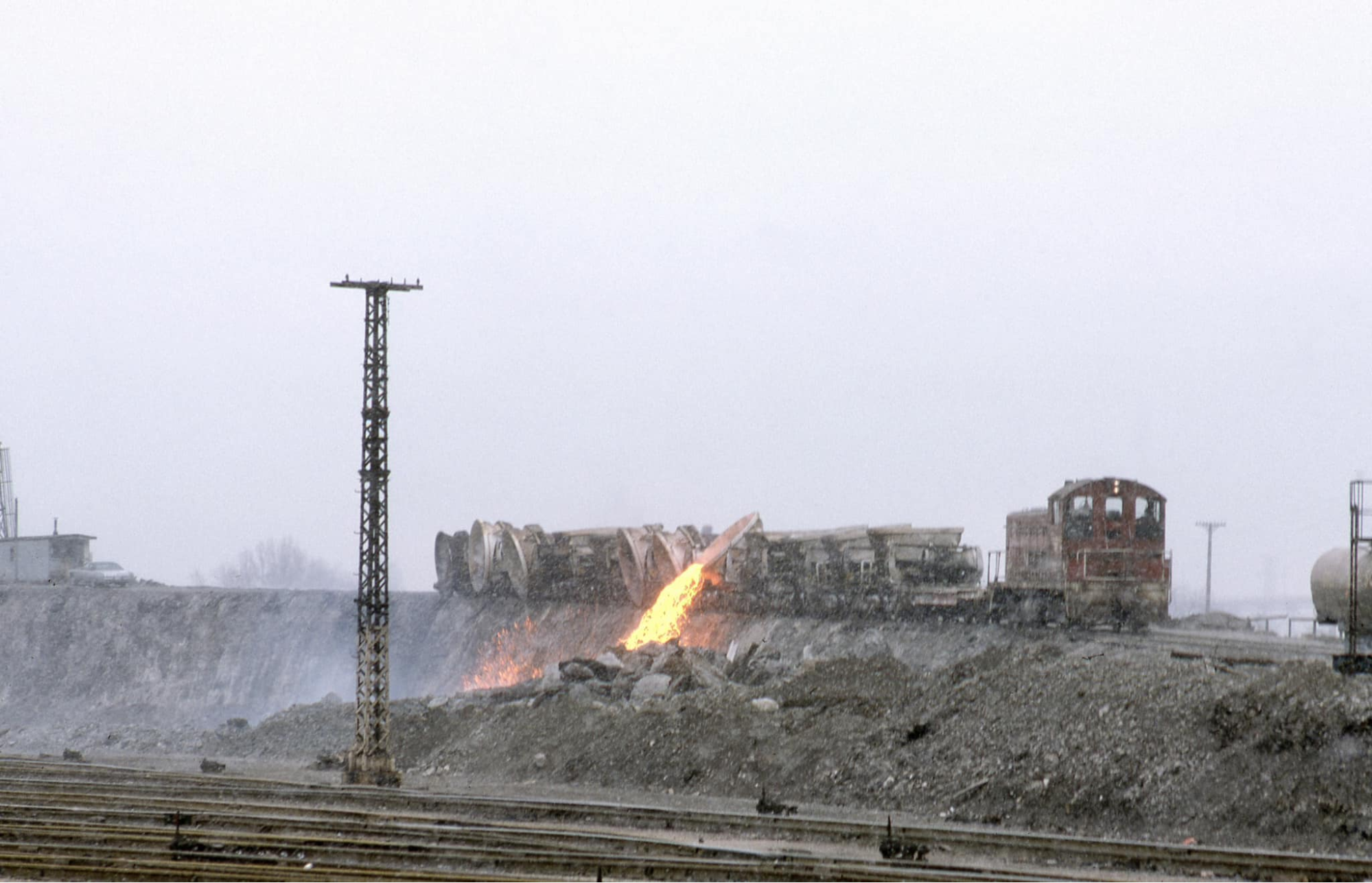
Dumping hot slag, South Chicago, Slag Valley
Industrial History: Lost/Wisconsin Steel
Noah, our son and first child, was born a few blocks from the slag dump. We were living in the basement flat of a rickety three story house in the “Irondale” meighborhood of South Chicagi, Chicago Ward 10. visible at the top of the photo below.
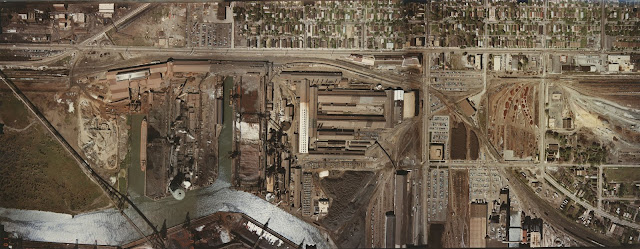
South Deering and Wisconsin Steel - Aerial Protographs 1976 (Noah’s birthplace 1979)
The photo above is a composite of three images showing Torrence Avenue across the top, Calumet River across the bottom, and Wisconsin Steel in between. From left to right, photo includes Acme conveyor, Wisconsin Steel south slip coal storage and coke ovens, north slip ore yards and blast furnaces, various mills, 106th Street, "Slag Valley" area. The photo is a composite of two photos, and focuses on the Calumet River showing Wisconsin Steel at the top of the picture and the Acme Furnace Plant and Valley Mould at the bottom. 106th Street and 106th Street bridge are near the bottom of the picture and north of 106th Street are General Mills slips and plant. Photos were taken May 18, 1976
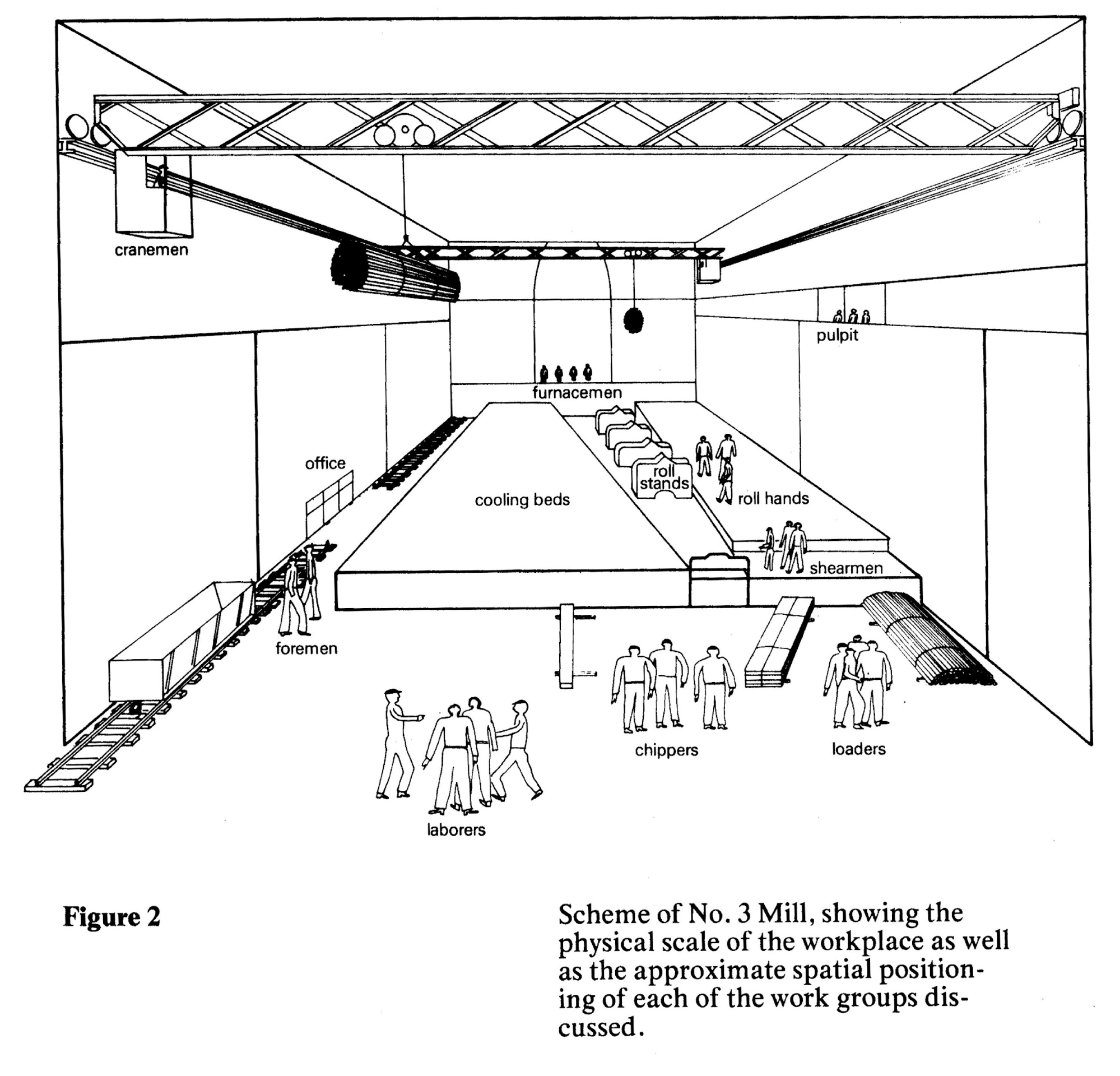
Schema of #2 Rolling Mill, from Blue Collar Community, 1974. Called #3 mill in the book, I worked as a sub-forman (white helmet nonetheless) on the finishing and loading end of the mill, in the foreground. Often a crane carrying a bundle of steel flew overhead.
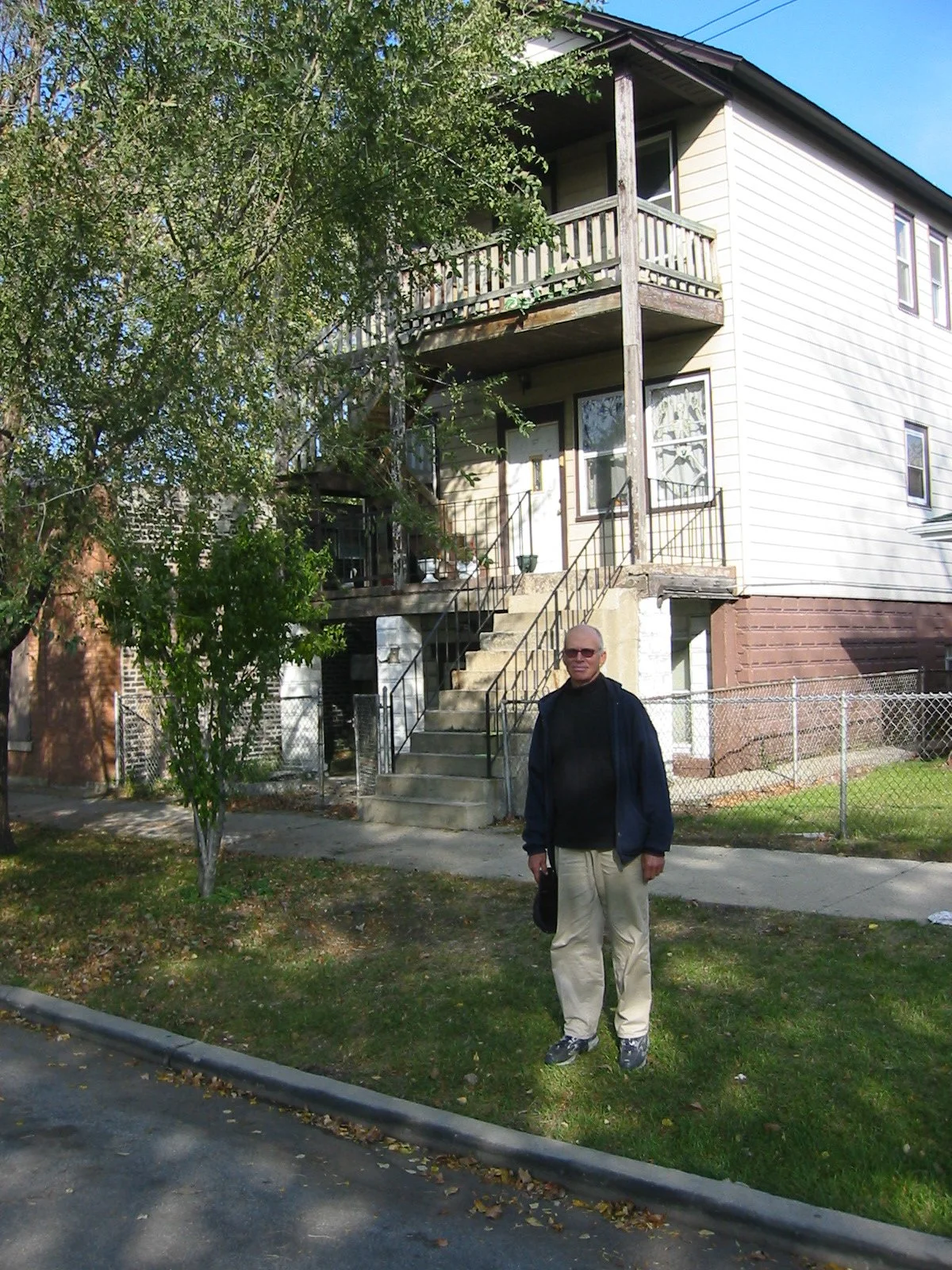
Our “Three Flat” on 104 and Hoxie, South Deering, Chicago.
Susan and I moved into a basement flat in South Deering in the winter of 1967. Directly across from the Bright School playgrounds were the Trumbull Park Homes.
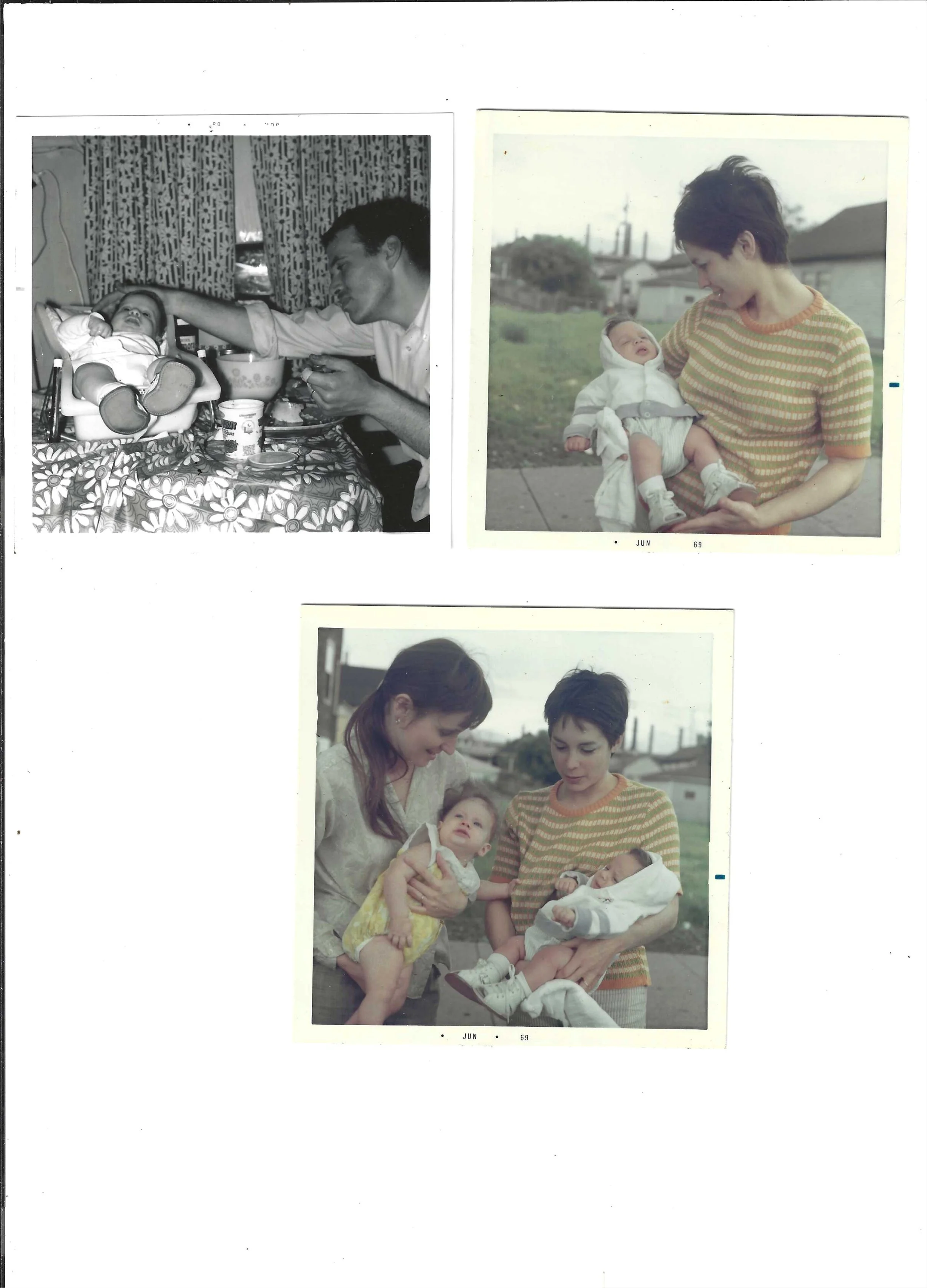
June 1969 Memorial Day. Visit by the Andersons at our baseent apartment on 104 and Hoxie, across from Wisconsin Steel. Photos show Susan with Noah, Bill with Noah, and Carol Anderson with Hillary.
The Wisconsin steel mill was three blocks away in the opposite direction, toward the Calumet River. We had the basement flat, where our son, Noah was born (1969), and where we lived for over two years, before moving to South Shore’s Rainbow Beach—after our mothers had a fit about living with the baby in smokey Irondale (South Deering). Also, by then we had two dogs. The apartment was crowded.
Some eight years earlier, the low-rise, tree-shaded Trumbull Park Homes had been the site of prolonged white protests directed at a few new black residents. The South Deering Improvement Association was the local white organization largely responsible for the segregationist and violent protests. Dan Delitch, the owner of a popular steelworker bar set on a prairie just south of the Harvester Steel mill where I worked, was a leader of the segregationist group in Irondale.
A few years later, 1967-68, I found myself hanging around with Dan and some of the other anti-integration leaders in South Deering and at the Improvement Association itself. I did not broadcast my politics. I always remember showing Dan a good deal of genuine non-judgemental interest and attention.
Trumbull Park Homes Race Riots, 1953-1954 http://www.encyclopedia.chicagohistory.org/pages/2461.html
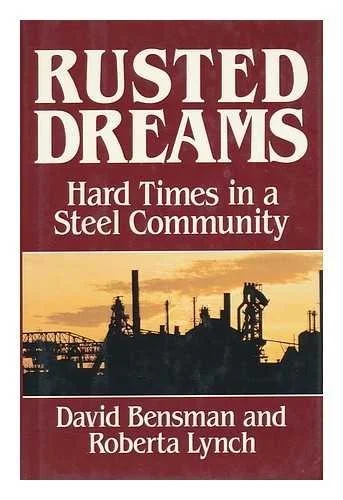
Rusted Dreams is the sad story of Wisconsin Steel’s bitter ending, despite heroic efforts to save it.
Rusted Dreams: Hard Times in a Steel Community (1987) https://dissentmagazine.org/online_articles/in-memory-of-david-bensman-1949-2020/
https://www.sechicagohistory.org/archive/browse/save-our-jobs-committee-march-and-meeting/ This is leader Frank Lumpkin’s version of the struggle and loss at Wisconsin Steel.
Wisconsin Steel – Mike “Drake” Drakulich
EXIT Zero — a family story of deindustrializaion in Southeast Chicago (Wisconsin Steel)
https://www.youtube.com/watch?v=WyK5PBLPn0I
Frank Lumpkin https://www.sechicagohistory.org/archive/browse/save-our-jobs-committee-march-and-meeting/
Trumbull Park Homes Race Riots, 1953-1954
South Deering had erupted in violence in 1953 over the issue of racial integration at the neighborhood's lone public housing project, Trumbull Park Homes, located at 105th Street and Yates Avenue.
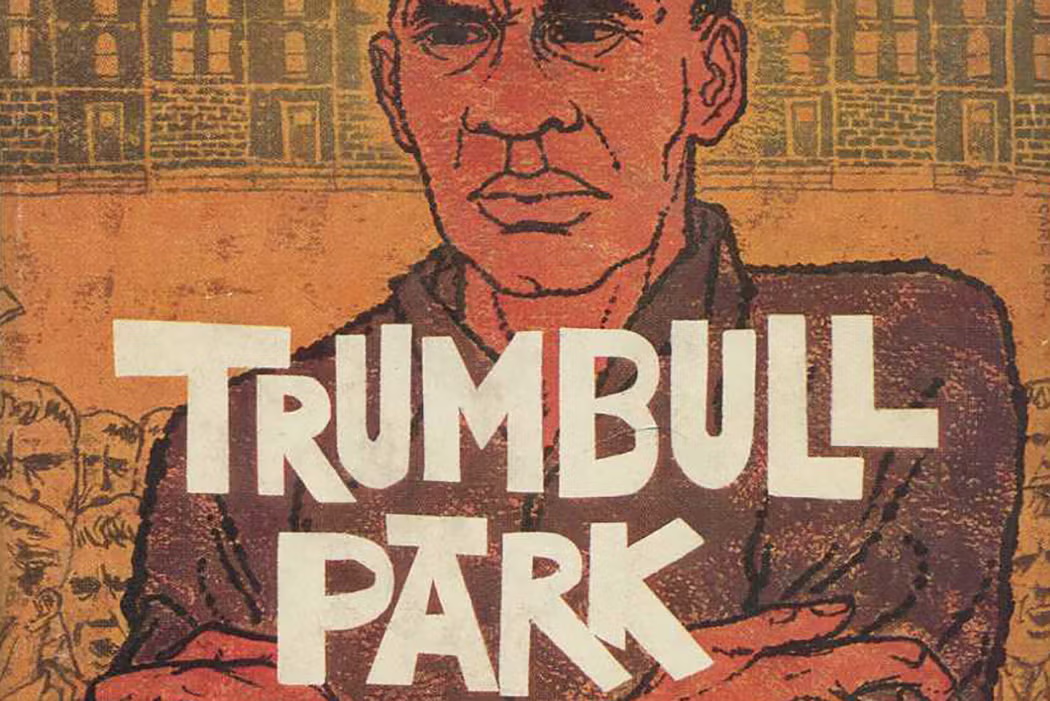
Frank London Brown’s novel Trumbull Park
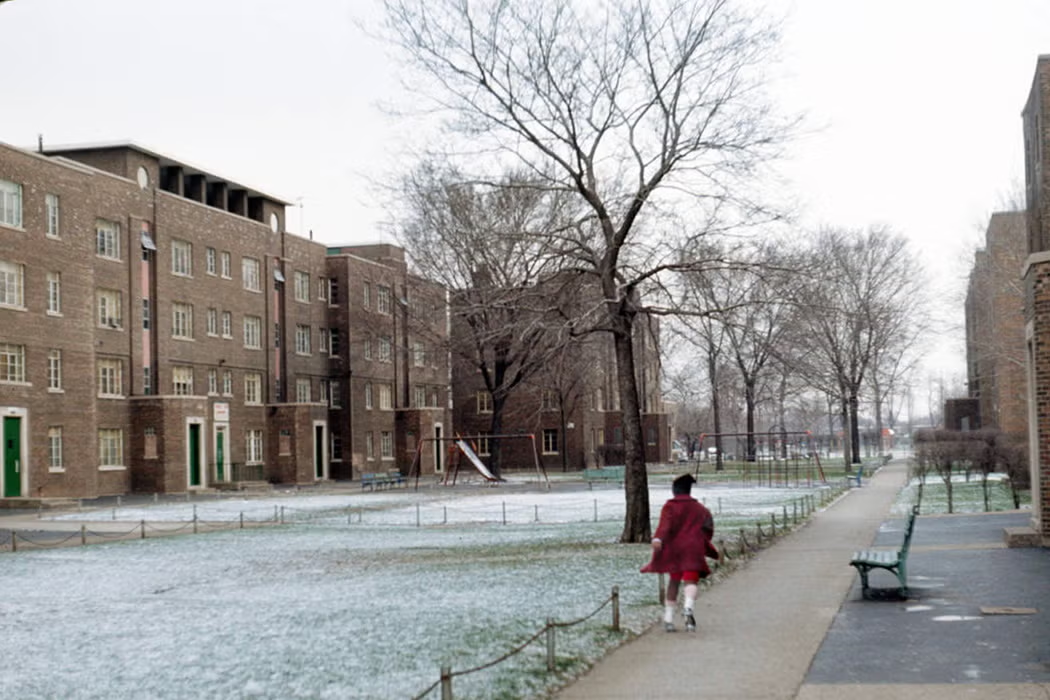
Trumbull Park Homes, CHA, South Deering, Chicago
Frank London Brown’s 1959 novel, Trumbull Park, which presents a powerful story of white supremacist hatred, was more recently selected (2020) for the Chicago Literary Hall of Fame.
How Trumbull Park Exposed the Brutal Legacy of Segregation - JSTOR Daily
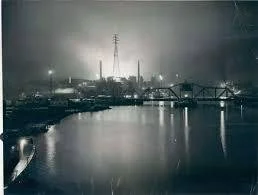
Calumet River Steel Mills in the 1970s
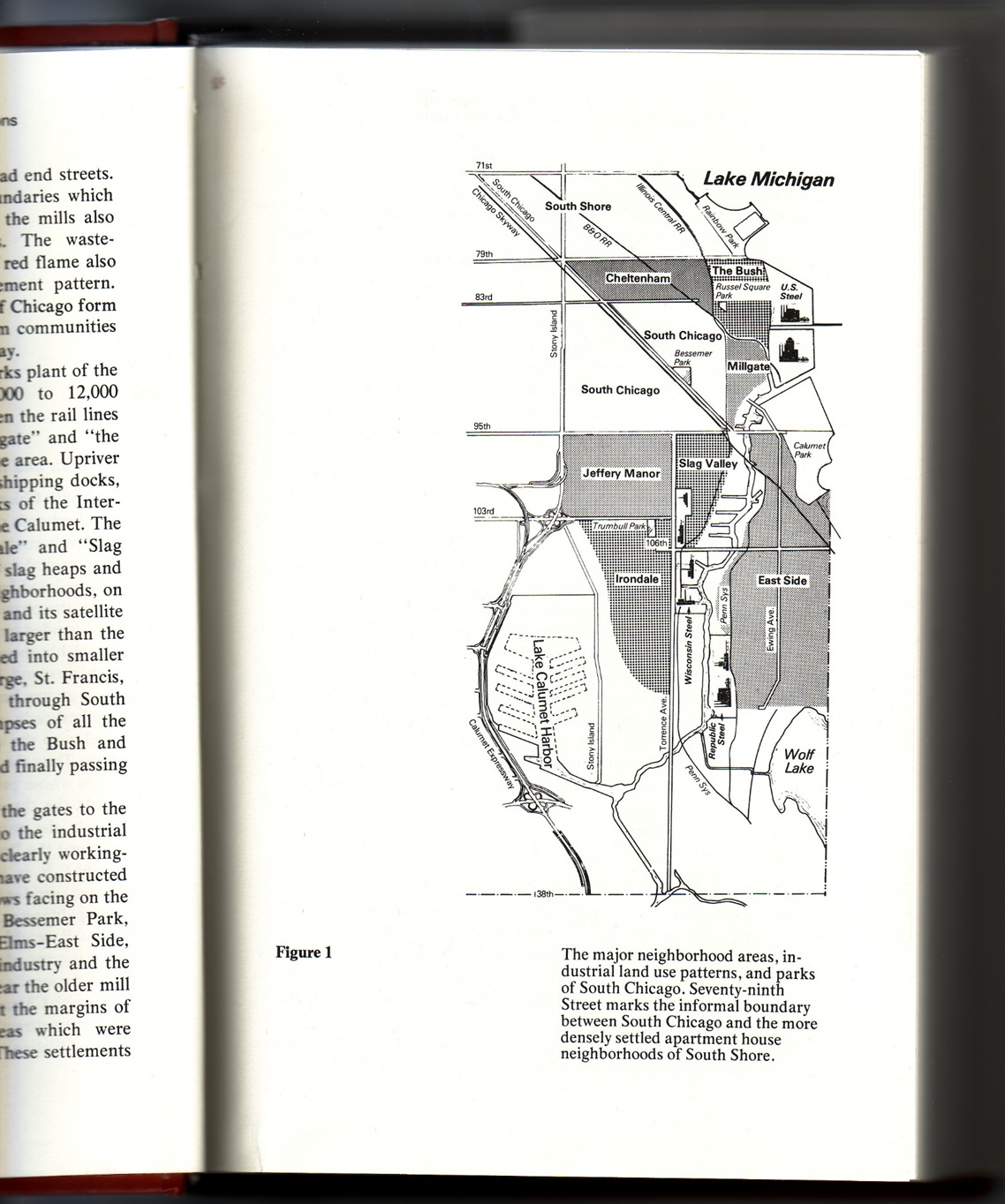
South Chicago neighborhoods and steel mills along the Calumet River
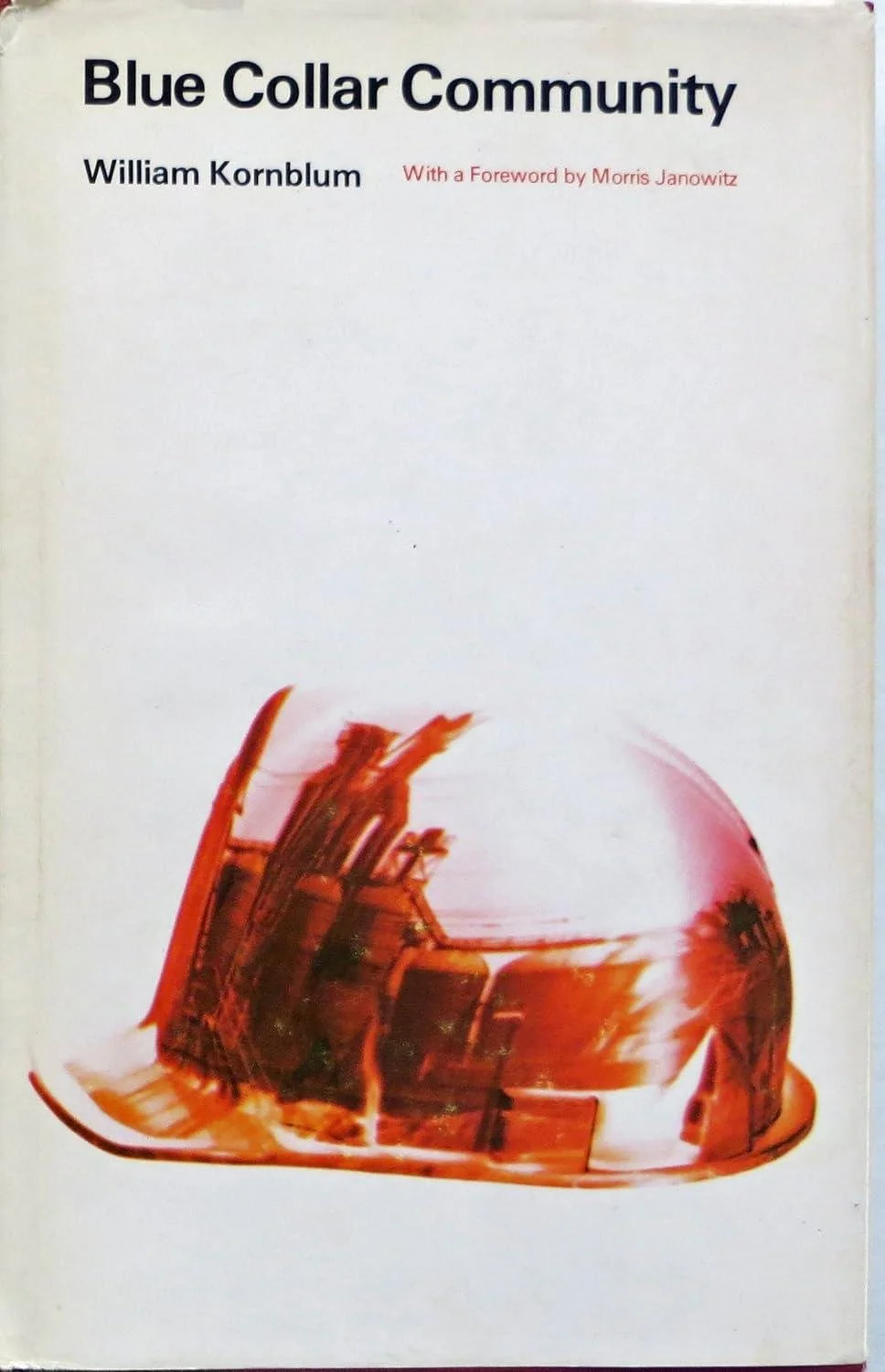
Blue Collar Community by William Kornblum, Univ. of Chicago Press, 1974
Blue Collar Community (1974)
Mirra Komarovsky wrote in Contemporary Sociology (1974) that Kornblum's main theme is "the emergence of solidarities that transcend ethnic groups. As leaders (in steel mills, unions, and political clubs) compete for prestige and power they form alliances across ethnic and racial cleavages. It is through such community-forming processes that successive waves of immigrant ethnic groups take their place in general community institutions, all the while maintaining some segmented social structures based upon ethnicity and race."
A. H. Raskin noted in the New York Times that "through close association with his neighbors …Kornblum saw the glacial slowness with which the success of interracial coalitions in shifting power in local union elections inside the steel plants produced any movement in the general politics of South Chicago toward closer cooperation between the entrenched ethnic groups—Poles, Serbs, Croatians, and Italians—and the newer elements seeking a toehold. Often the progress in ward politics was all backward. Racial assertiveness among Mexican-Americans and blacks tended to foster a resurgence of self-conscious ethnic identity into the third and fourth generations."
After Abe Raskin’s review appeared in the Times in 1975, I became the academic equivalent of a “made man.”
Raskin had been the dean of NY labor journalists for decades and was ending his career. It was highly unusual for him to write a review of an academic book. My father and mother were a bit stunned. Assistant Professor job offers came in from top Ivies and many others.
My family thought I already had the perfect job at CUNY. In full agreement, I worked there for the next forty years, yet always remained close to my South Chicago friends as well, often joining them in political battles.
Eddie and His pal(s)
Ed Sadlowski ran for Director of USWA District 31 in the winter of 1972 As promised, I came in from Seattle , on leave for the quarter, to help start the campaign. I had defended my dissertation at the UC spring of 1971, after writing it that first year at the UW.
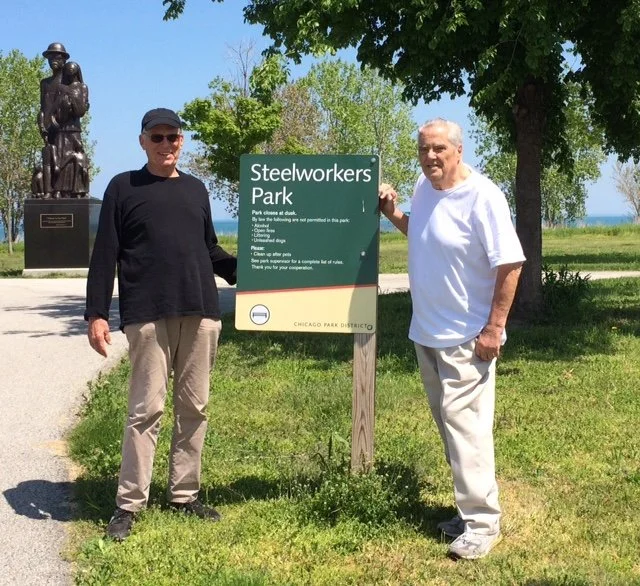
2016
This classic labor documentary includes the original footage of the Memorial Day Massacre at Republic Steel , For more on this event and its significance see:
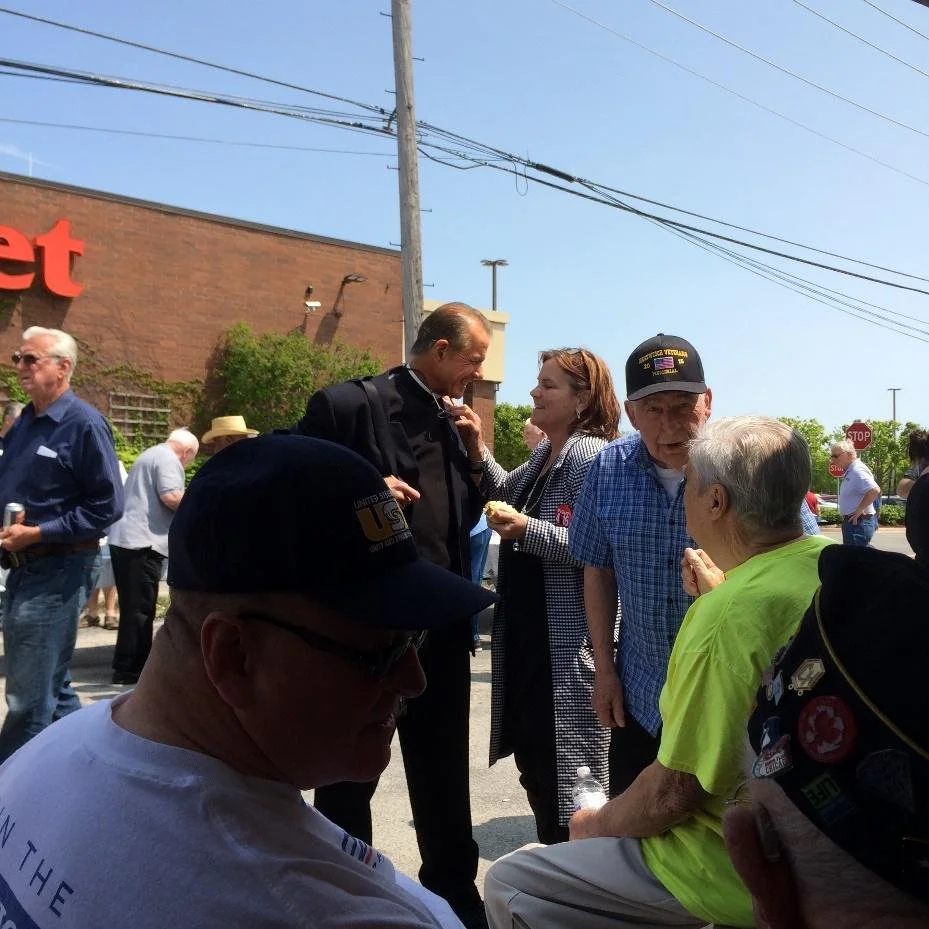
Susan and Ed Sadlowski with “radical priest” Father Len Duby, East Side, South Chicago 2015
Park Socialists
Chicago’s steel mills are forty years gone to brownfields. Most of the union halls are shuttered. Yet the parks, with their fieldhouses and pools and quiet preserves, remain as enduring gifts from social visionaries.
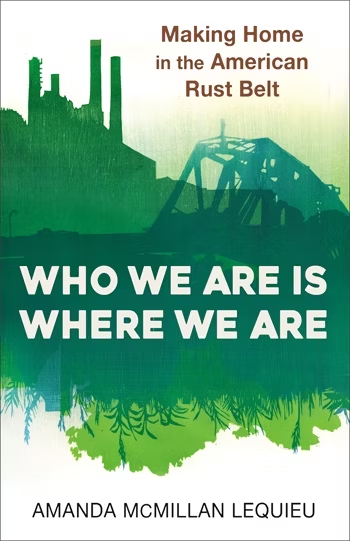
Who We Are Is Where We Are: Making Home in the American Rust Belt
Columbia University Press, 2024.
This book re-envisions the process of deindustrialization typically understood as the largely economic cause of outmigration as a surprising example of the persistence of people in place. Drawing on interviews, ethnography, and historical research from two communities in the American Midwest, Lequieu asks not only how people remain long-term in environmentally and economically precarious landscapes, but why these places continue to matter to those who stay put.
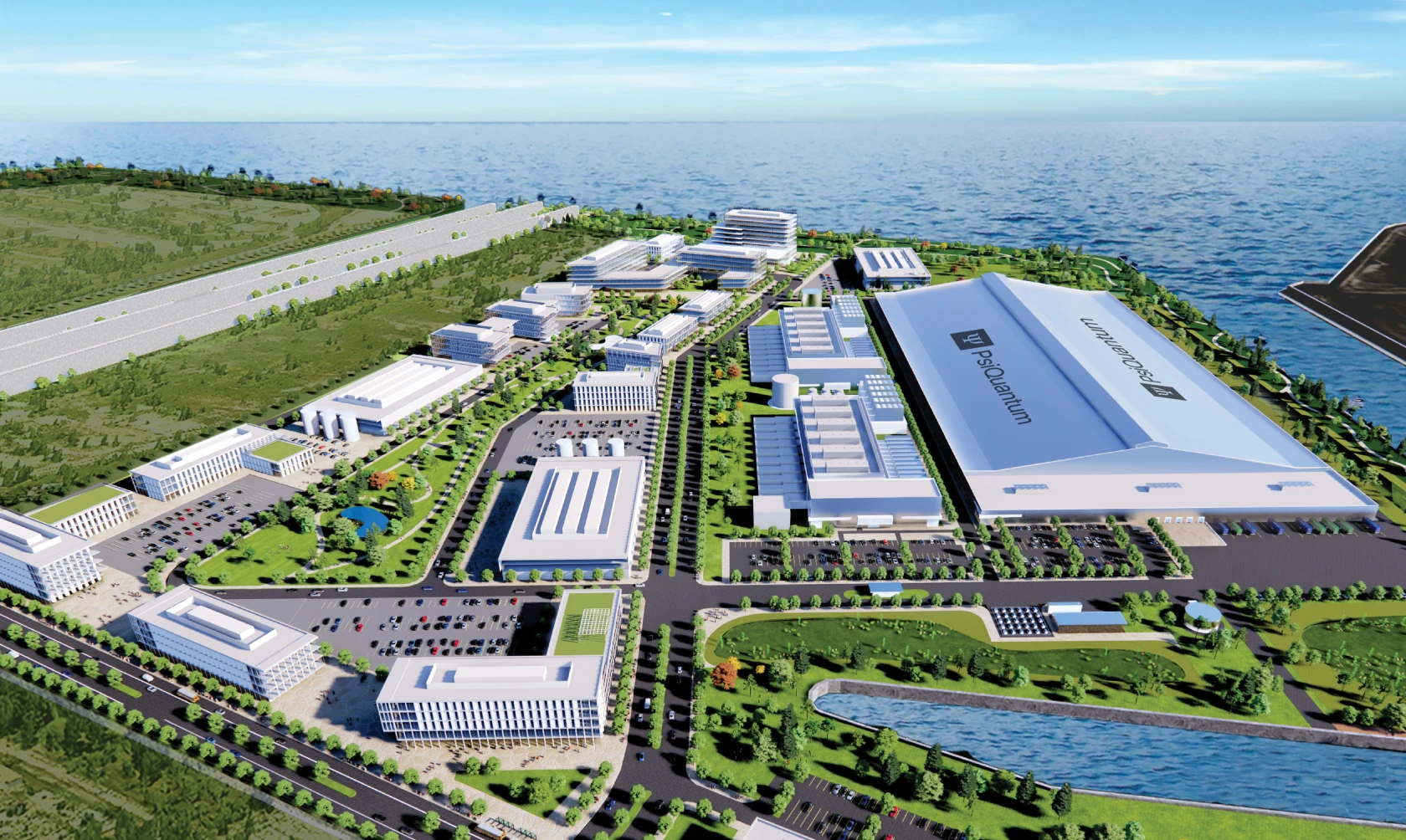
Rendering of PsiQuantum’s facility at the former South Works site, which will have the country’s first utility-scale quantum computer.Courtesy of PsiQuantum
