Finding South Chicago
Morris Janowitz knew about my research in Yugoslavia in 1967.
I was also a student of, and becoming friendly, with Gerald Suttles, both of us newly attached to Morris’ research Center. One day Janowitz saw me in the hallway of the social science building and called me into his office:
“I hear you know about Serbs and Croatians and you learned some of the language. How about thinking of a thesis about these groups in Chicago?”
A few trips to explore the Humboldt Park area of South Slavic settlements on Chicago’s Northside convinced me this research would not be for me. The groups were all led by extremely conservative clerics and were riven with ethnic resentments that traced back to European wars. I doubted their ancient quarrels would hold my interest. But I hesitated to deliver the bad news to Mr. Janowitz. He was, after all, the most important professor in the department.
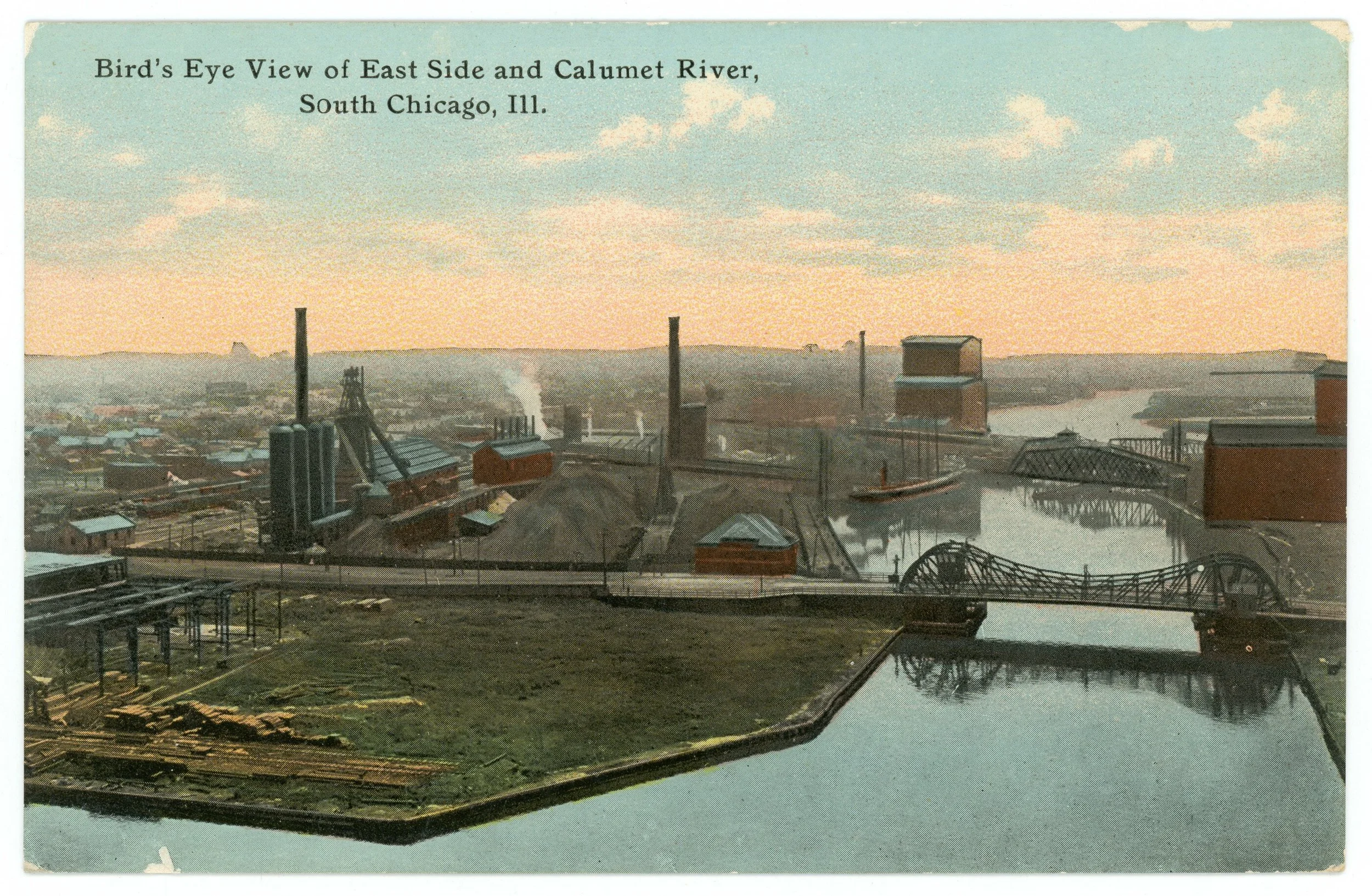
Fortunately, I got a break. A used VW Susan and I had bought in Europe had arrived for pickup at the Port of Chicago, on the far Southside. There I discovered the vast industrial region that extended from the Calumet river out to rural Indiana, and where there seemed to be endless iterations of ethnic enclaves with Slavic neighborhoods crowded up against smokey steel mills. There were union halls, bars and restaurants to explore, and signs of political contests everywhere. I knew immediately that this was “a community area” I wanted to explore. (NB ecological terminology, region of communities and neighborhoods).
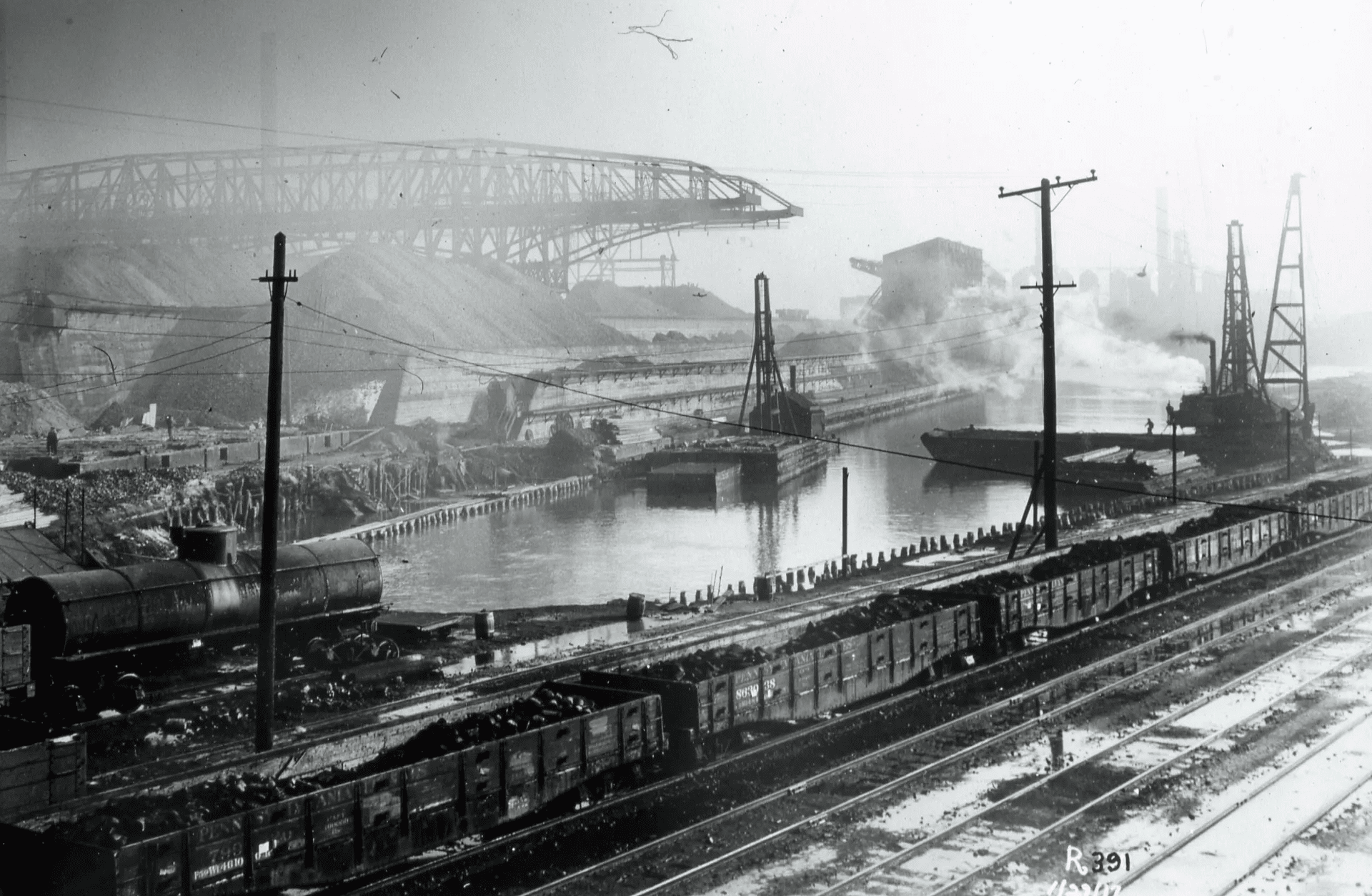
South Slip at South Works, 1917.
Chicago’s Temple of Steel: South Works since 1882
In time I began understanding that I was doing a study of South Chicago, a richly complex “industrial community”, rather than an “ethnic study” a la W.I. Thomas’ the Polish Peasant. Since I had spent my MA year, 1964-65 year studying in Donald Bogue’s Community and family study Center, I had learned to apply the Chicago ecological-community studies perspectives and methods. To understand South Chicago “in a holistic fashion”, as a singular type of human community, the ecologists’ demographic and mapping methods we applied in the Bogue seminar proved invaluable. So did the ethnographic field methods Geralds Suttles was teaching (see Mentors, Peers and Collaborators page for more).
