The Resilient City: Marseille
I have been blessed with French friends and mentors for my entire adulthood, starting in Abidjan, Cote d’Ivoire, 1962.
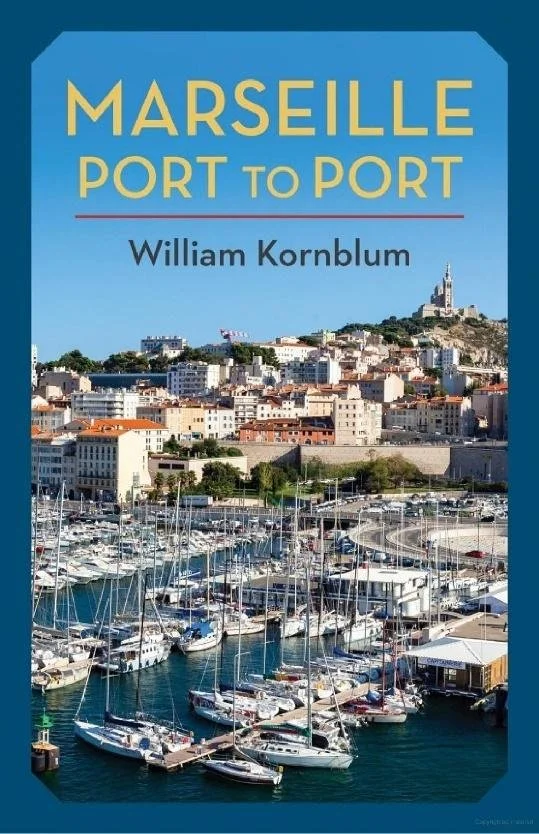
I think of my book, Marseille, Port to Port as my personal homage to French society and culture, especially to its globally diverse, post-colonial present. Perhaps more than any French City or town, Marseille demands, and in-turn rewards, my global perspective.
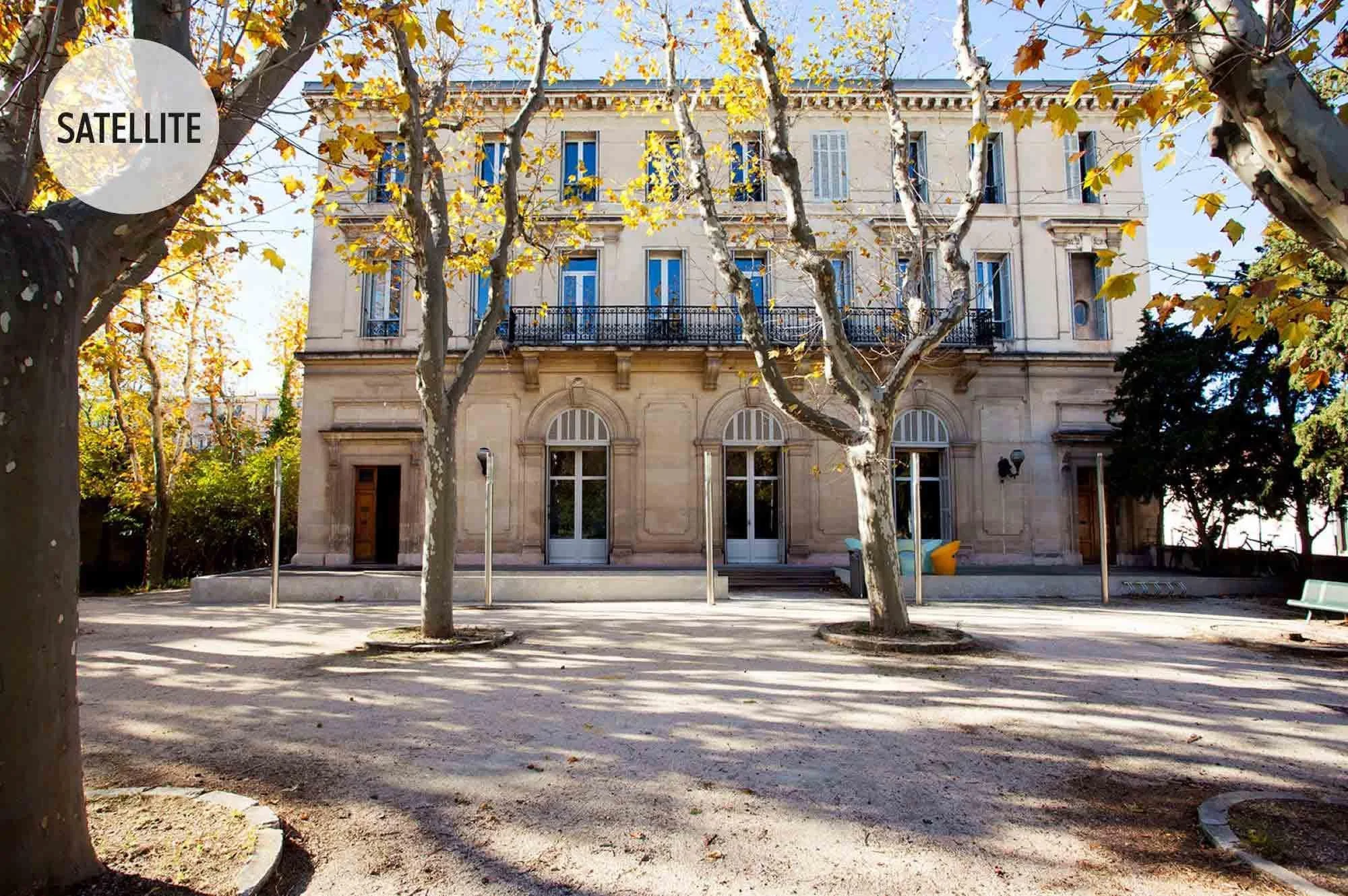
In 2014 I was awarded a six-month residence at the Institute for Advanced Study (IAS) of Aix Marseille Université.
From previous visits to the city, and discussions with colleagues, I had decided that my goal would be to find people and situations that spanned the city’s North-South divide, and also highlighted the powerful effects its natural environment has on its residents and its neighborhoods.
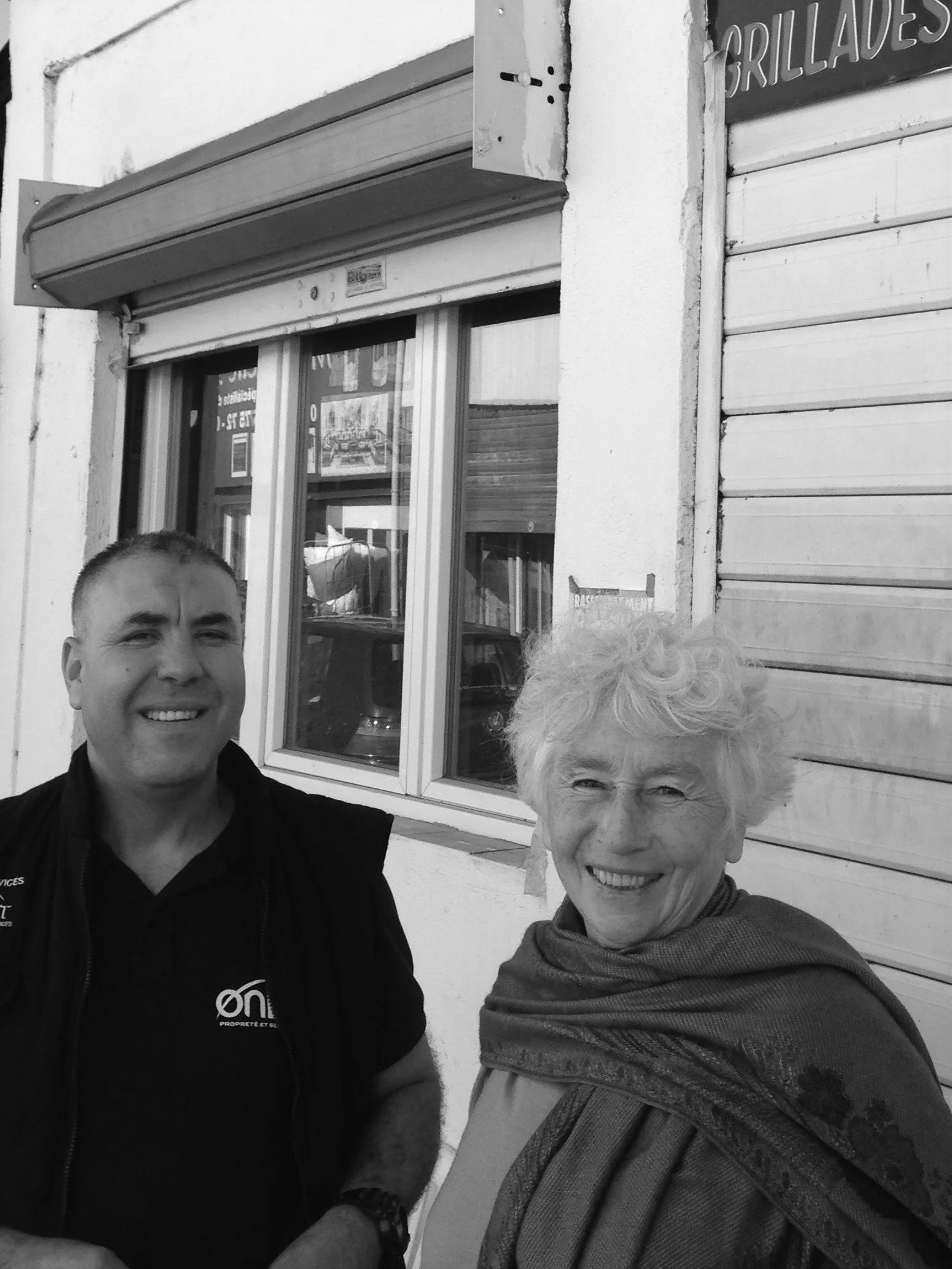
Christine Breton in Marseille mrket with friend Omar, 2014
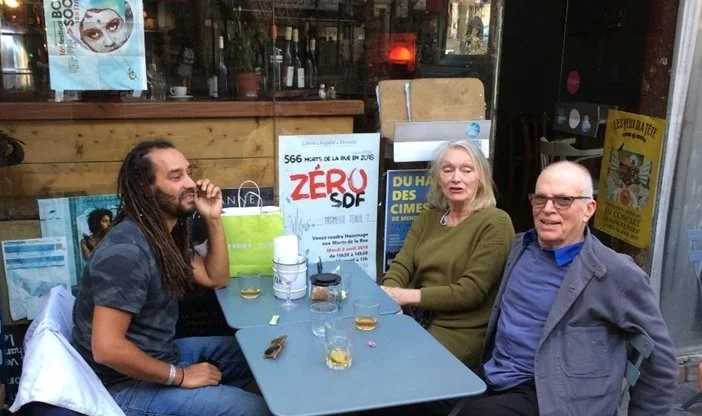
Michèle Jolé, friend, collaborator, mentor, in her Paris neighborhood, with her son Ismael ), a successful Parisian recording artist Ismaël Jolé-Ménébhi better known by the stage name Taïro (born in Paris on 5 February 1978), is a French singer, songwriter of dancehall reggae.
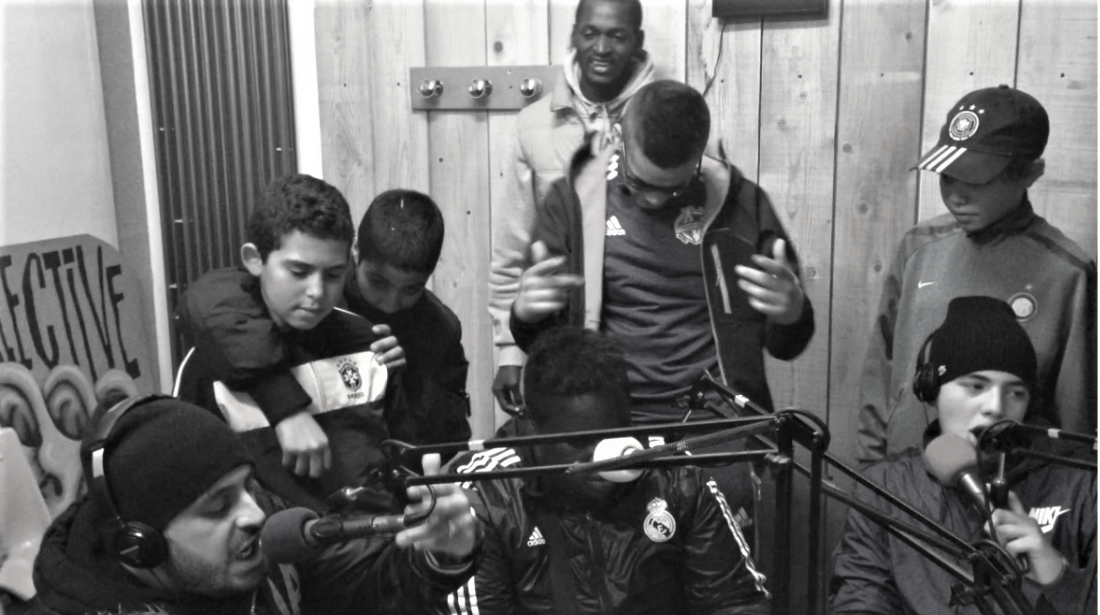
Jean Silva and young rappers from la Visitation at Radio Galere, 2014
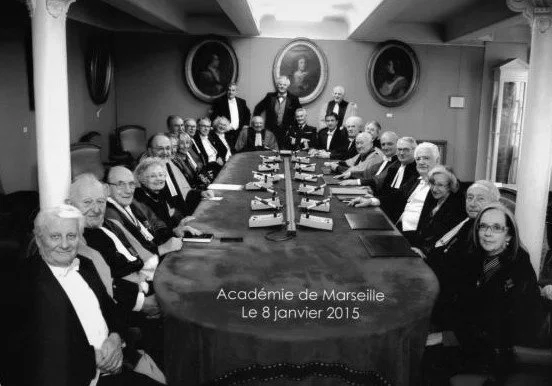
Meeting of the Marseille Academy, Hubert Ceccaldi, third on left.
Friend and Marseille mentor Jean Samuel Bordreuil [Sam}
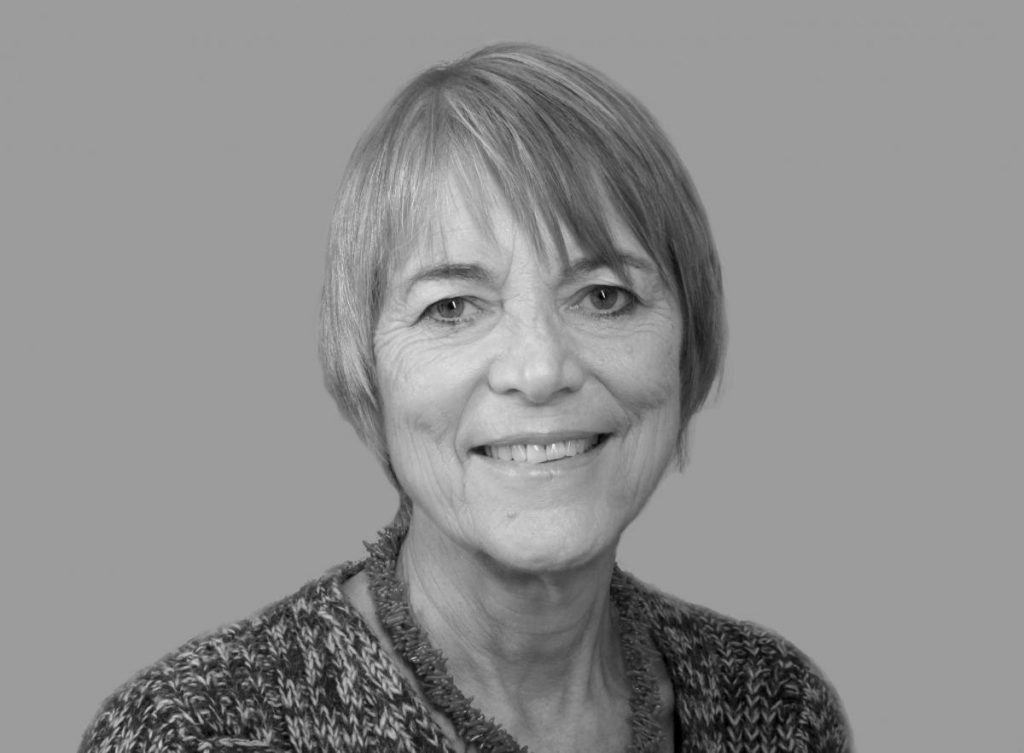
Anne Lovell - Aix and Marseille, friend and dear colleaque
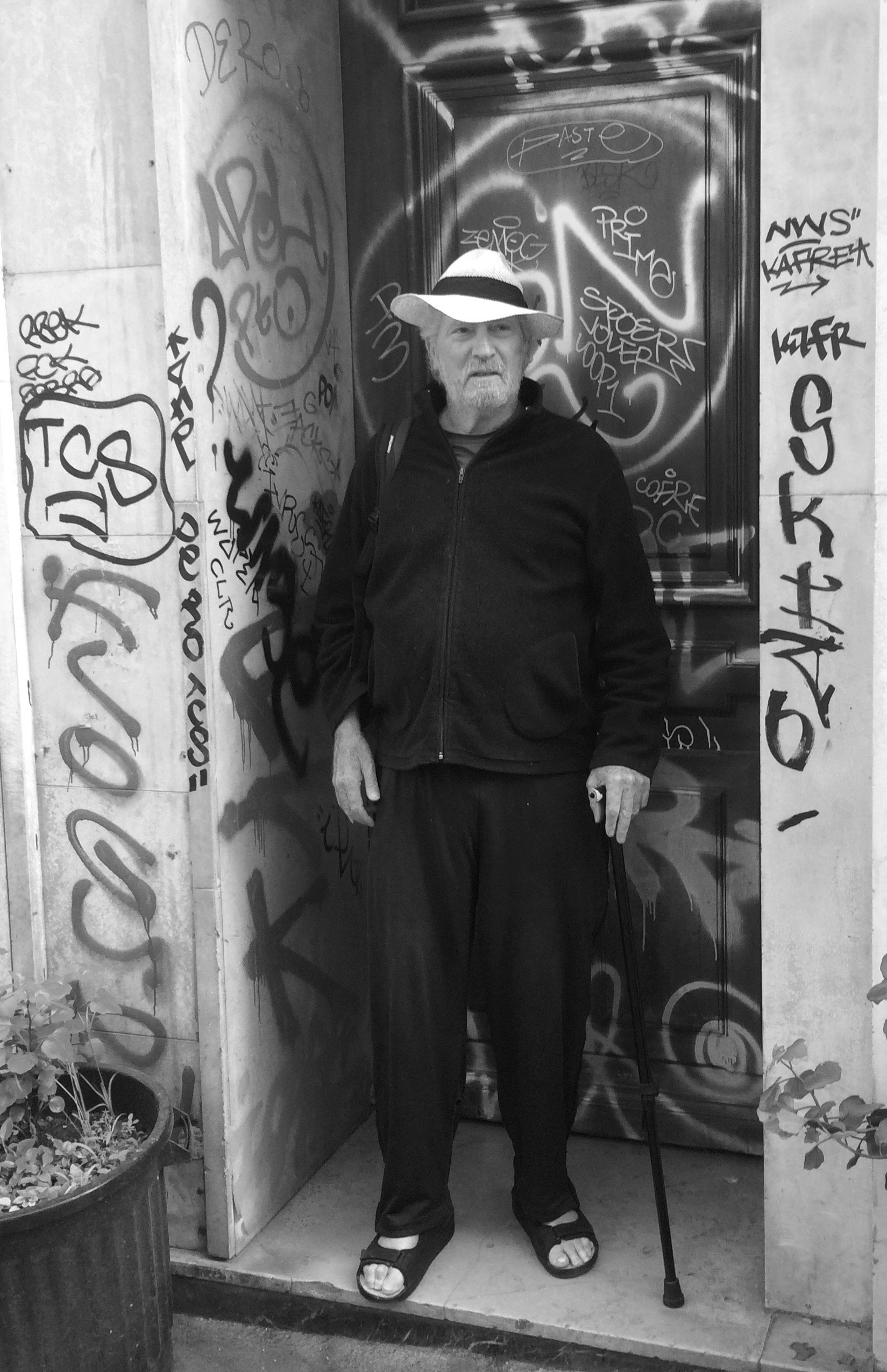
le professeur Ken Brown in his Noailles doorway, 2017
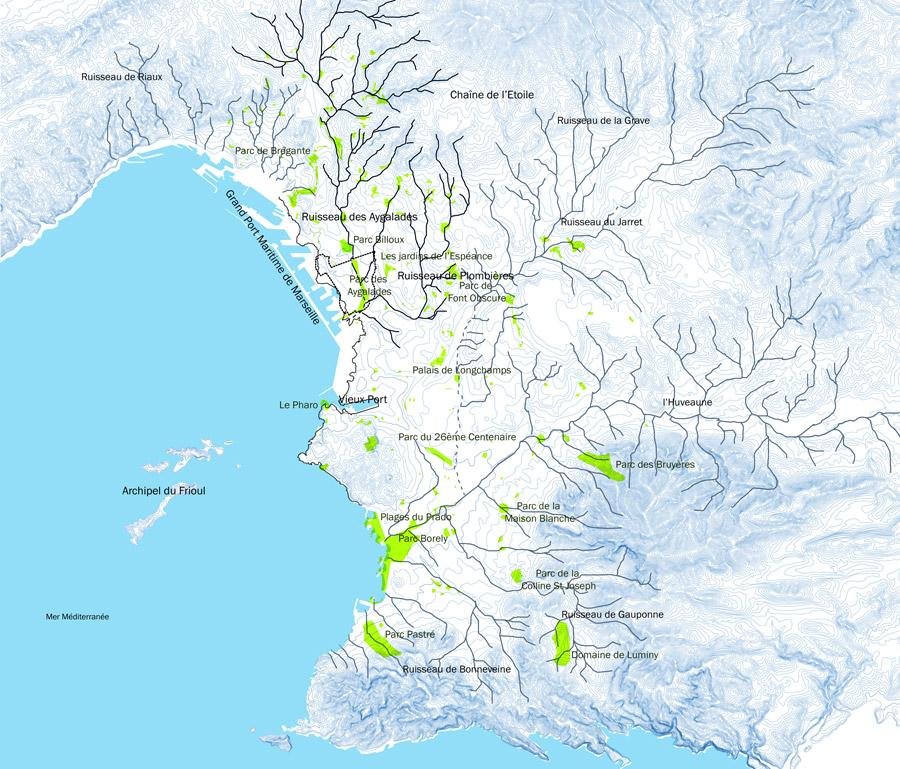
Marseille’s Aygalades Creek and its ecologies
{Article published in French, Revue Marseille, 2016, at the request of editor
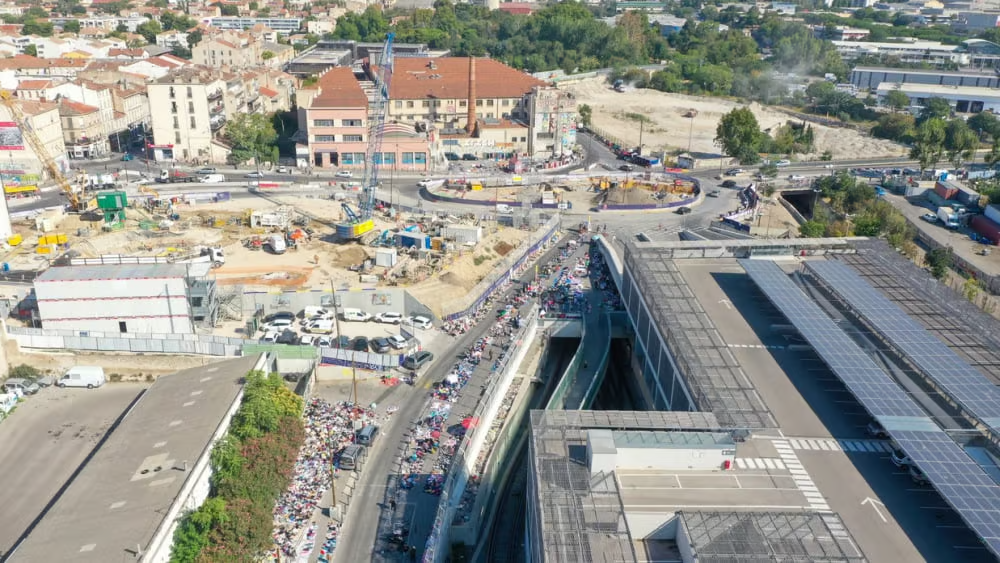
On the map of the Marseille watershed, the Aygalades stand out. Of all the streams descending the slopes of the Phocaean city, it has the greatest number of tributaries. Despite its significance in the geomorphology of the city, its traces are difficult to decipher under the palimpsest of highways, railways, and boulevards, the legacy of Marseille modernity. For example, the stream is briefly visible in the vicinity of Billiou Park and Rosa Parks School on Aygalades Avenue, before it dives permanently under the hard strata of urban infrastructure. However, throughout its course, its waters are polluted by residues from past and present industries.
So why go to such lengths to track this canalized and tormented urban stream? Why does Aygalades creek draw the interest of an American sociologist and environmentalist?
After all, it is not necessary to travel to Marseille to find rivers in disrepair. An American could start with the Colorado River and desertification caused by unsustainable water demand in the face of global warming. A lesson from last century’s environmental disasters, from the American desert to the Bronx River in New York, or the Aygalades Creek is that we need to better understand the original natural environment on which cities and metropolitan areas were built. To measure the social and natural condition of a city like Marseille in the 21st century, we need to start with the intelligence of its environment.
During a six-month stay in 2014-15 at the Mediterranean Institute of Advanced Studies, I conducted personal explorations in the densely urbanized northern districts of Marseille, in part, by following the course of the Aygalades stream. The purpose of my explorations was to understand the ecology of human habitats in the context of the region’s natural environment.
For this of course I needed local knowledge. The ecosystems in the Marseille region are very different from those I knew in New York. I turned to my friend Jean-Samuel Bordreuil, a retired university professor from Aix-Marseille. Sam is a hiking enthusiast with a profound knowledge of the Provençal environment, the garrigue, and mountain streams such as the sometimes torrential Aygalades, sculpter of steep valleys. Sam filled me in on the geomorphology of the city’s craggy northern districts.
My first guide to the stream’s human ecology was Christine Breton, an accomplished historian and activist from Marseilles. She was particularly interested in identifying historic sites and ecological treasures in the city’s northern neighborhoods. An intrepid walker and interpreter of Aygalade culture, Christine seemed to know the history and legend of every neighborhood along the Ibrahim Ali Avenue from Les Crottes to La Viste. She knew all the hidden paths along the creek, as this passage in my notes shows:
Christine led me along the creek bordering Billoux Park. We had to slip through a small opening in a wire fence to follow its course behind the huge St. Louis sugar refinery, whose the main customer, I learned, was the local Coca Cola bottling company. Above the refinery, the creek appeared to us under a pavement, from where it plunged deeply under a concrete embankment.
Christine was also able to interpret contemporary social and political scenes in the many subdivisions along the creek. Although she is retired and no longer living in Marseille, her influence on the city’s environmental and social ideas remains. Contemporary thinking and politics Marseilles,at least on the left, reflects an ecological sensitivity which links human communities to a natural landscape in need of restoration.
Now, from my office in New York, the web allows me to follow how green mobilizations in Marseille make visible the existence of le ruisseau des Aygalades and the ecological issues it presents.
The most ambitious approaches to the restoration of Aygalades Creek -- or perhaps its reinvention -- come from the Phase2 Euromediterranean projects, envisioned to extend from the Canet to Billiou Park. On their websits, the architects of Leclercq Associés aim for a feat of modern ecological engineering, guaranteeing a peaceful urban waterway with a constant flow of purified water. Its banks will form a lush green park that should be completed in 2028. Delivered as promised, the new park of Aygalades would be a key element in the coming decades of redevelopment of the old districts of the “rear port" of Marseille, with the urban canal tamed, landscaped, and animating the neighborhoods to come.
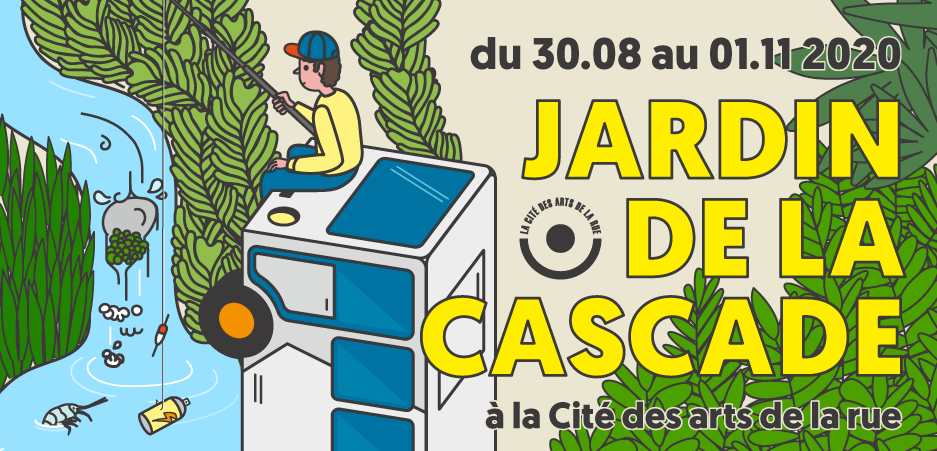
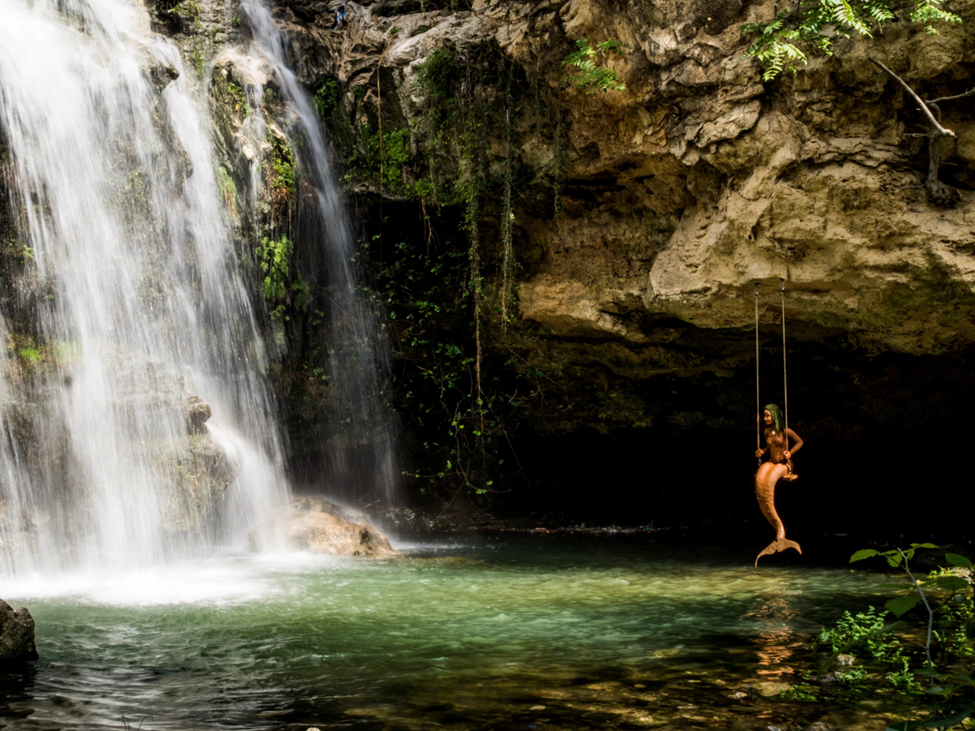
It is necessary to go further upstream along the Aygalades to find a more untamed section of the stream. A very encouraging example was revealed to the public in 2022, when La Cité des Arts de la Rue inaugurated a landscaped garden with access to the Cascade des Aygalades. “In 2016, the Cité des Arts de la Rue began construction to try to repair what brutal urbanization had done to this corner of nature. It is a question of “renaturalizing” the creek, and creating public space where the public can be welcomed to enjoy and to learn. ”
( http://www.sunwhere.en/2021/04/un-dimanche-aux-aygalades-cascade-marche-et-arts-de-la-rue.html)
According to its animators, this opening “speaks to the urban situation of the northern districts of Marseille. The Cascade des Aygalades fuels a desire for natural heritage that a violent urbanization has not been able to respect.”
A sad example of this violent disrespect at the creek’s edge is the dusty, grass -covered slag heap that sits nearby La Visitation, a social housing development on Aygalades Boulevard beyond Billiou Park. La Visitation is located along the creek, whose green valleys form a large part of the building space remaining in this part of the northern districts of the city. But most of the its 600 residents would have difficulty identifying the creek in their neighborhood, hidden as it is by natural and artificial ravines.
My guide at La Visitation (as well as to other neighborhoods in the north of Marseille) was Jean Sylva, a young activist and organizer from the neighborhood. With the help of local activists. and that of the prefecture, Jean created a cultural center, small but extremely friendly, in the heart of the housing project. Jean and his colleagues showed me where, in front of La Visitation, the stream was meandering out of sight behind a pile of slag which rose higher than the buildings of neighboring apartments. The heap was a remnant of the alumina production industry that once flourished in the region. Alumina is the first component of aluminum. Its residue, or slag, is called red mud (boue rouge) and contains toxic compounds of heavy metals, sand and gravel. While the EuroMed mega-project is planning its next phase of development closer to the central city along the avenue des Aygalades, below the Visitation, the future of the hectares of land polluted by the slag heap along the creek remains unknown. Their fate will greatly depend on the efforts of local residents and volunteer associations representing the entire creek, such as Les Gammares (https://www.facebook.com/gammare), to keep the toxic nature of red sludge, and the need for remediation, on the public agenda.
In these anthropocene times, the desires and politics of our human species shape the fate of all other ecosystems. As the preceding examples show, the fate of the Aygalades Creek, like that of urbanized rivers the world over, will be forged, for better or for worse, by our growing understanding and our restorative efforts.
https://metropolitiques.eu/An-American-in-Marseille.html 2022 review in France of Marseille Port to Port
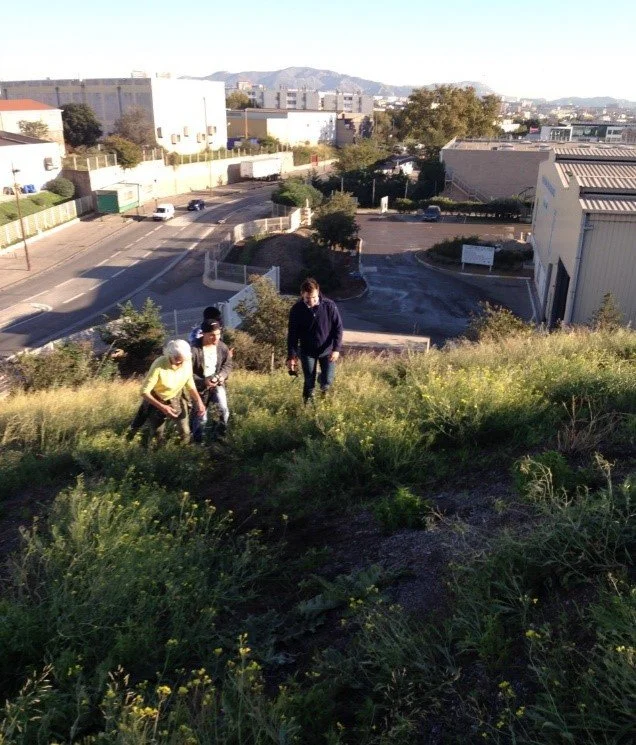
Hiking with Christine Breton up the abandoned industrial dump (le crassier) adjacent to La Visitation, Marseille 14ieme, 2014
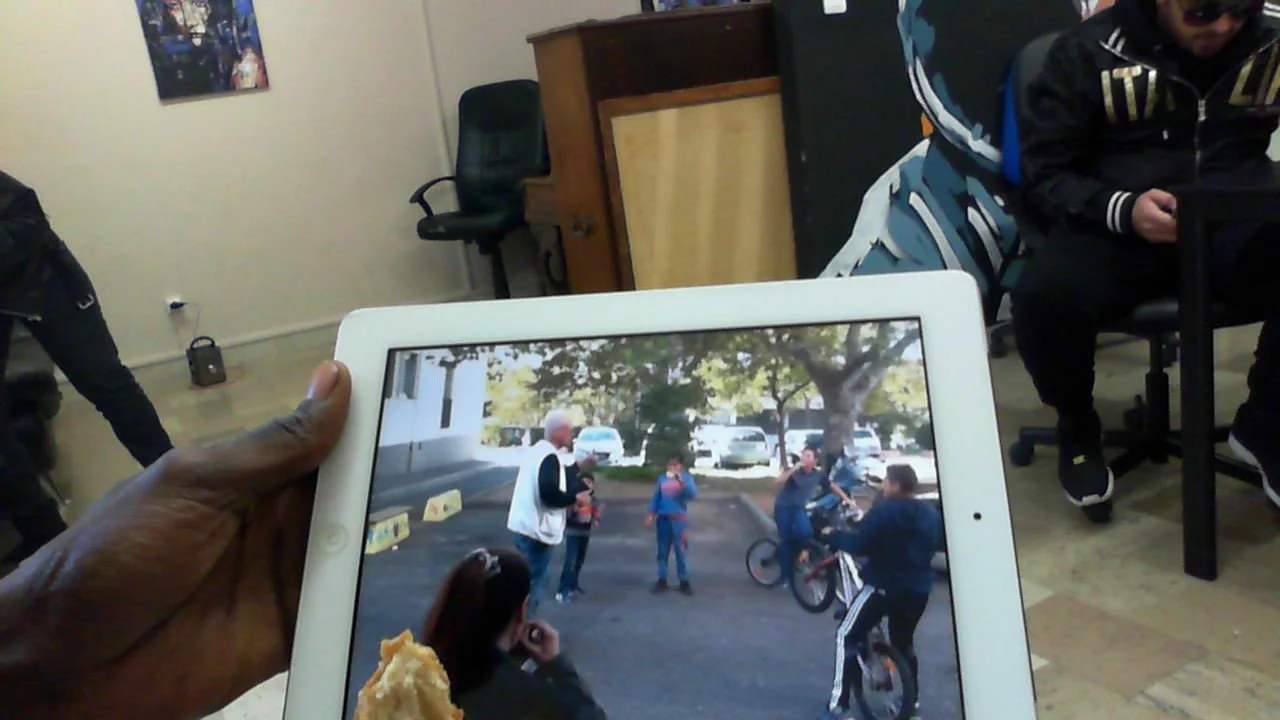
Jean filming Bill “rapping” with local kids outside “Le Local,” La Visitation, Marseille 14ieme, 2014
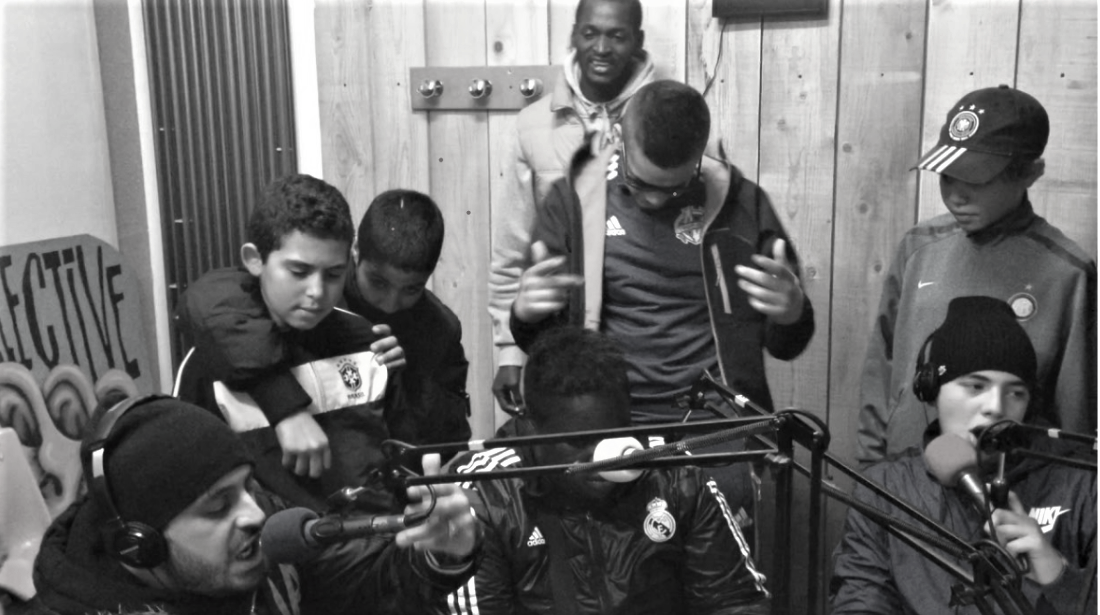
Jean and boys from La Visitation rap with Gino at Radio Galere, Friche de Belle de Mai, 2014
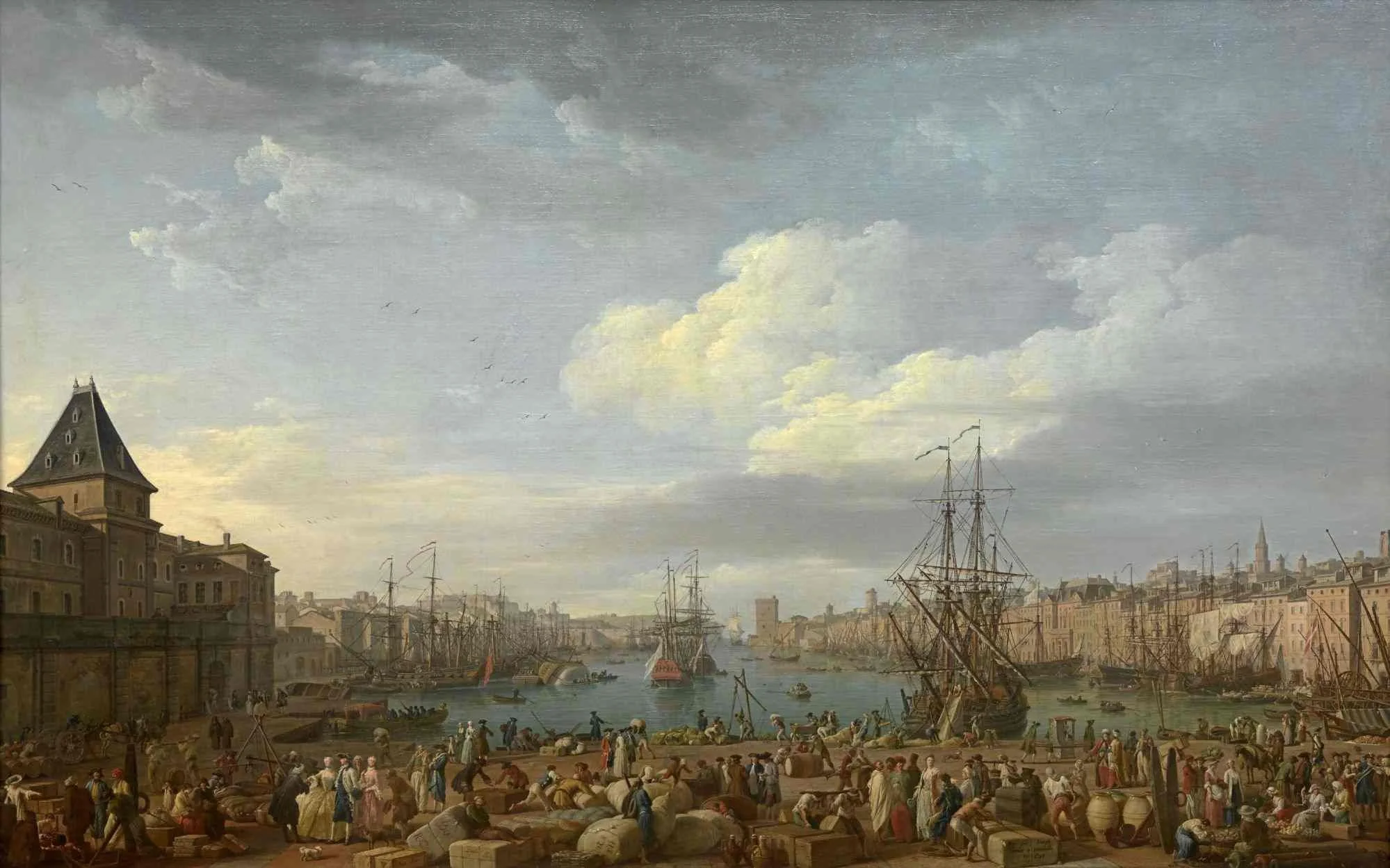
Claude-Joseph Vernet’s Interior of the Port of Marseille (1754) is a renowned oil painting depicting the bustling 18th-century Old Port of Marseille. Commissioned by Louis XV, it is part of his "Views of the Ports of France"
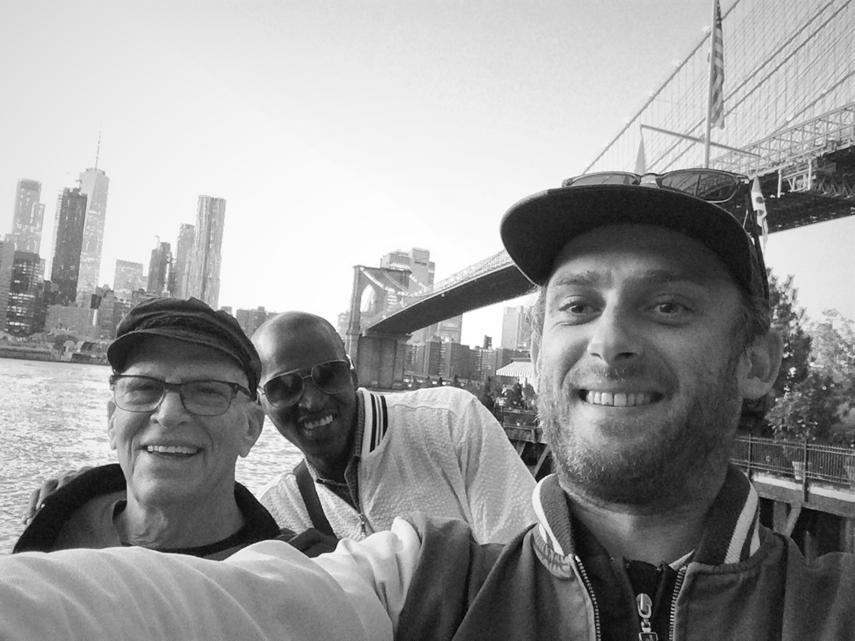
Brooklyn boys, Bill, Jean, Vince, 2014
